
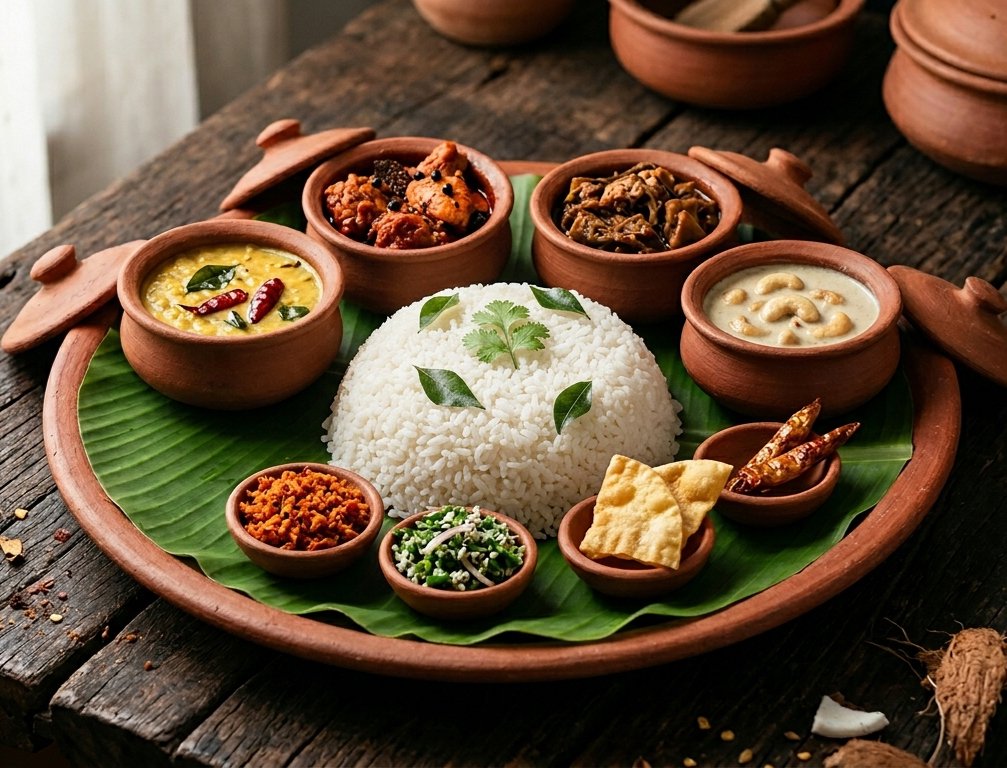
Sri Lanka is not just a destination for golden beaches and ancient ruins; it is a paradise for food lovers. If the island had a heartbeat, it would pulse with the aroma of roasted curry powder, fresh coconut milk, and the sizzle of tempered spices. For anyone traveling to this tropical gem, exploring the Island Flavors is an essential part of the journey. In this guide, we dive deep into the soul of Sri Lankan food—from the humble rice and curry to the world-famous street food favorites.
The Philosophy Behind Sri Lankan Flavors
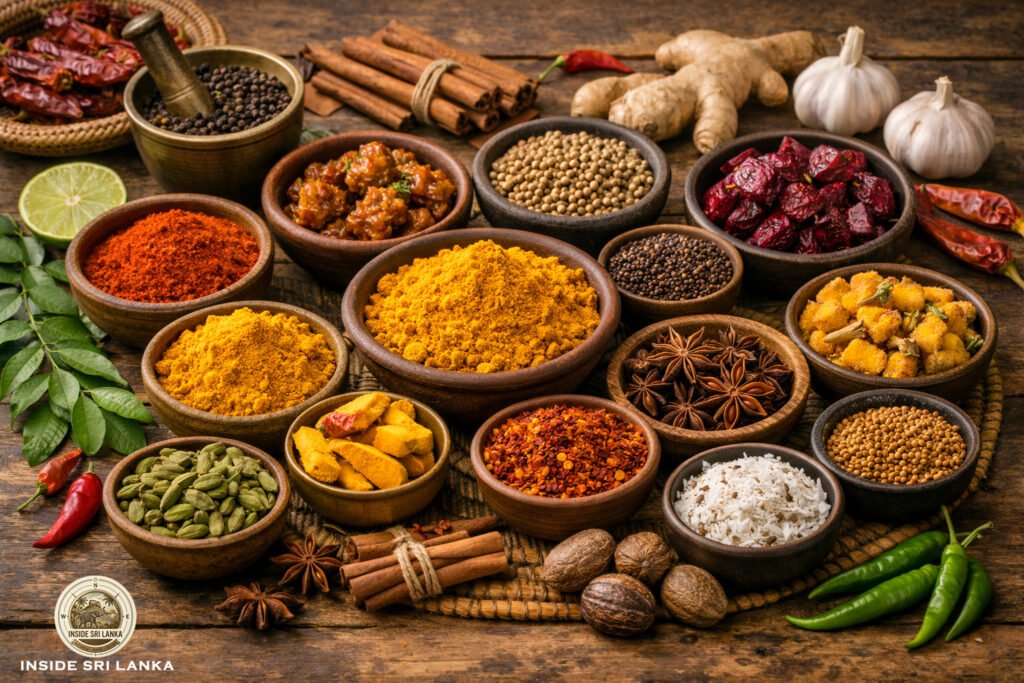
What makes Sri Lankan food so unique compared to its neighbors? It’s the balance of flavors. A traditional Sri Lankan meal is a masterpiece of balance, hitting all six tastes: sweet, sour, salty, bitter, pungent, and astringent.
The secret lies in the spice rack. While Indian cuisine often relies on heavy creams and ghee, Sri Lankan cooking is powered by the coconut tree. From the creamy milk used in gravies to the grated kernels in fiery sambols, coconut is the lifeblood of our kitchen.
The King of the Table: Authentic Rice and Curry
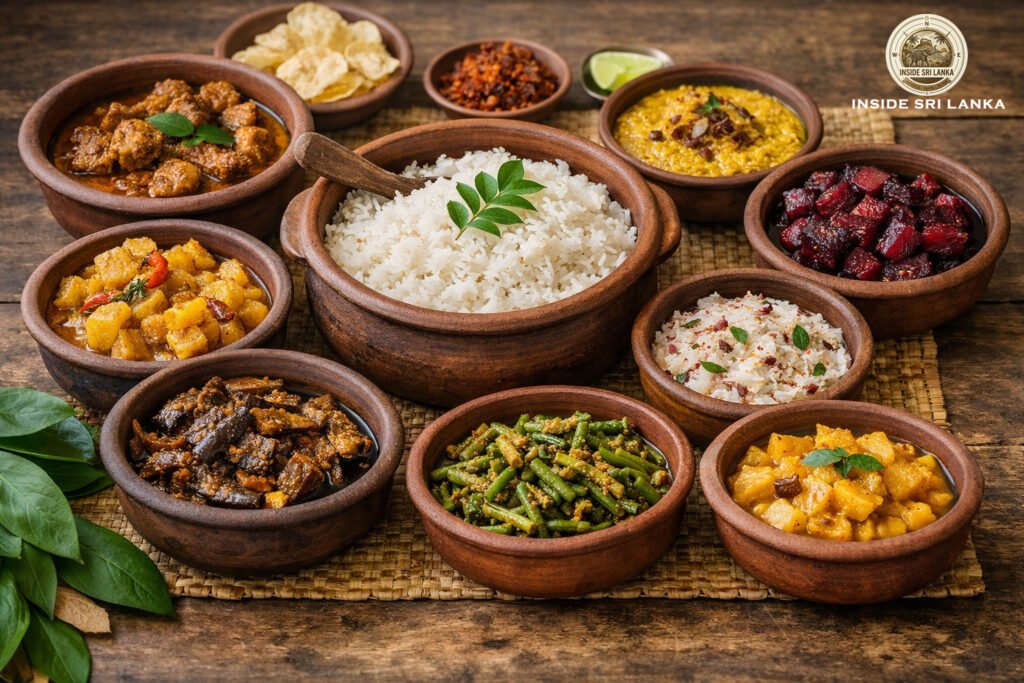
When you ask a local, “What’s for lunch?” the answer is almost always “Rice and Curry.” But don’t let the simple name fool you. A proper Sri Lankan lunch is a royal feast consisting of a central mound of rice surrounded by five to ten distinct curries.
1. The Staple: Heirloom Rice
Sri Lanka is home to hundreds of traditional rice varieties like Suwandel (scented rice) and Kalu Heenati. These are not just carbs; they are nutrient-dense grains that have fueled our ancestors for generations.
2. The Comfort: Parippu (Dhal Curry)
No meal is complete without Parippu. Myer lentils are cooked until soft with turmeric, onions, and green chilies, then finished with a thick pour of coconut milk. It provides a creamy, mild base that balances out the spicier dishes.
3. The Soul: Pol Sambol
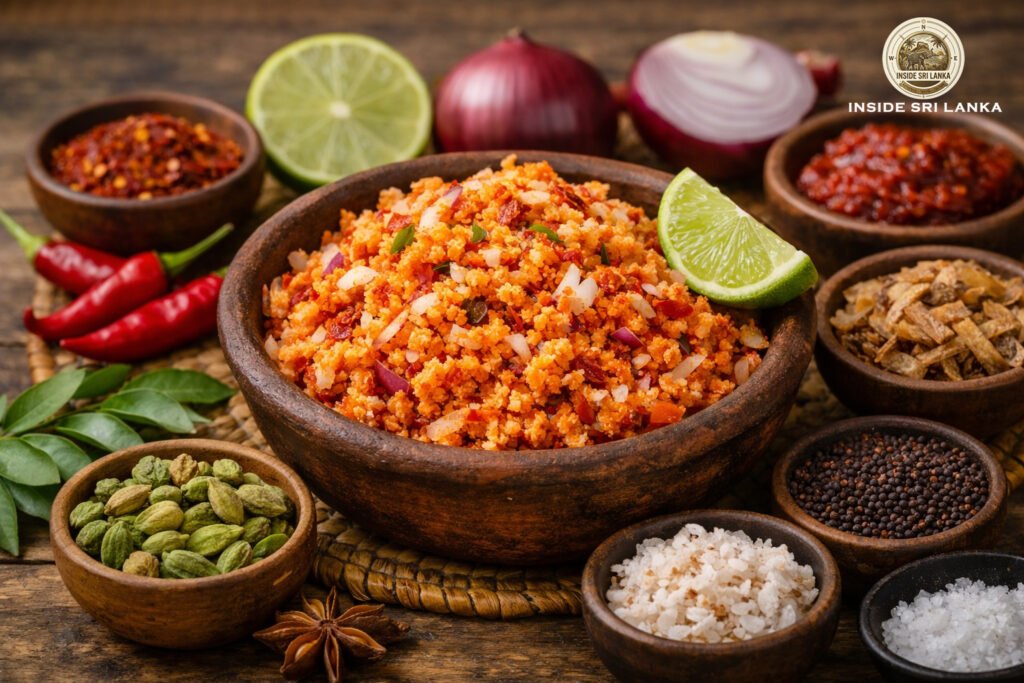
If there was a national condiment, it would be Pol Sambol. It’s a raw relish made by grinding fresh coconut with dried red chilies, red onions, salt, and a generous squeeze of lime. Some even add a bit of Maldive fish for an extra savory kick.
4. The Sweet & Sour: Wambatu Moju
This is the “crown jewel” of the plate. Eggplant is deep-fried and then pickled in a mixture of vinegar, sugar, mustard seeds, and small onions. It’s an explosion of flavor that cuts through the heat of the other curries.
Street Food Legends: Kottu and Hoppers
As the sun sets over the Galle Face Green in Colombo, the air fills with a rhythmic clanking sound—the “music” of the Kottu maker.
Kottu Roti: The Rhythmic Delight
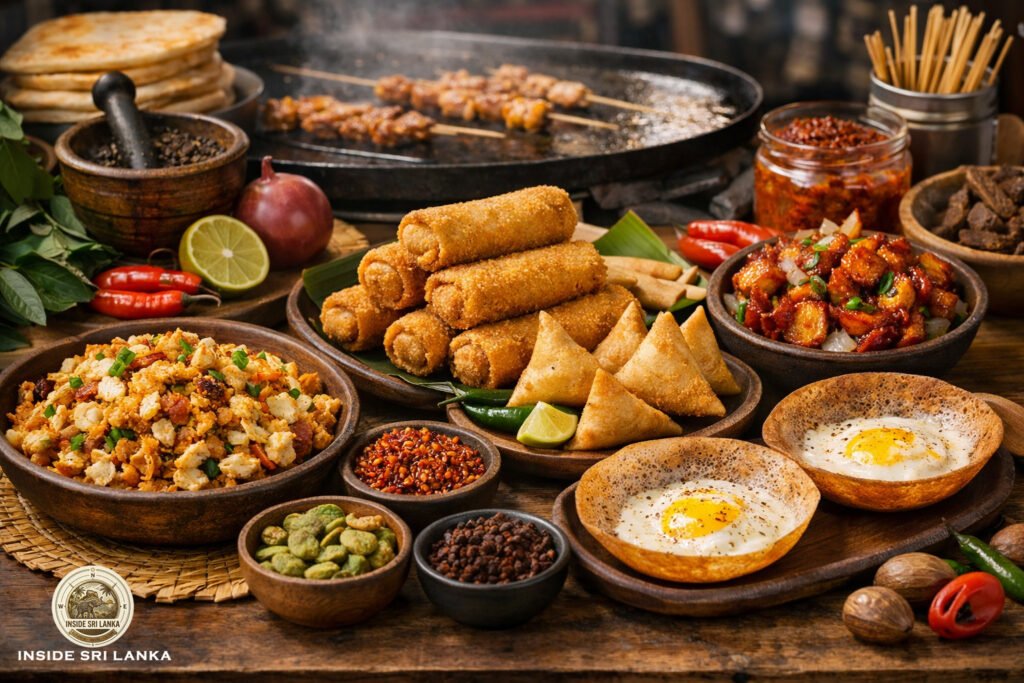
Kottu is the ultimate Sri Lankan street food. It’s made from shredded Godhamba Roti, stir-fried with vegetables, eggs, aromatic spices, and your choice of protein. The metal blades used to chop the roti on a hot griddle create a sound that every Sri Lankan recognizes from miles away.
Hoppers (Appa): The Crispy Bowl
Hoppers are bowl-shaped pancakes made from a fermented batter of rice flour and coconut milk. The edges are thin and crispy, while the center remains soft and doughy.
- Egg Hoppers: A whole egg is cracked into the center while cooking.
- String Hoppers (Idiyappam): Fine strands of rice flour dough pressed into mats and steamed. Best served with Kiri Hodi (coconut milk gravy) and Pol Sambol.
The Secret Spices of the Island
Sri Lanka was once known as the “Spice Island,” and for a good reason. Our cinnamon (Ceylon Cinnamon) is considered the best in the world. Unlike the tough Cassia found elsewhere, Ceylon Cinnamon is delicate, sweet, and incredibly healthy.
Our Roasted Curry Powder is another game-changer. We roast coriander, cumin, and fennel seeds until they turn a dark, chocolatey brown. This gives our meat curries—especially the Black Pork Curry and Spicy Chicken Curry—a deep, smoky complexity that you won’t find anywhere else.
Why Sri Lankan Food is a Superfood Diet
For the health-conscious traveler, Island Flavors offer more than just taste. Most of our ingredients are plant-based and functional.
- Turmeric: A natural anti-inflammatory used in almost every dish.
- Gotu Kola: A leafy green often made into a salad (Sambol) that is known for boosting brain health.
- Jackfruit (Kos): Often used as a vegan meat substitute, jackfruit is rich in fiber and vitamins.
Tips for Travelers: How to Eat Like a Local
If you want to truly experience these flavors, keep these tips in mind:

- Use Your Hands: Sri Lankans believe that eating with your fingers creates a sensory connection with the food. It also allows you to mix the different curries perfectly into every bite.
- Ask for ‘Less Spicy’: If you aren’t used to heat, be careful! Sri Lankan chilies are legendary.
- Drink King Coconut (Thambili): The best way to cool down after a spicy meal is a fresh, bright orange King Coconut. It’s nature’s best electrolyte drink.
Conclusion
Exploring the Island Flavors of Sri Lanka is more than just eating; it’s an invitation into the homes and hearts of the people. Whether you are enjoying a simple meal at a village ‘Bath Amma’ (Rice Mother) stall or dining in a high-end restaurant, the authenticity of the ingredients remains the same.
Sri Lankan food is bold, vibrant, and unapologetic. It reflects the history of our island—a blend of indigenous roots, colonial influences, and a deep respect for nature. So, when you visit, come with an open heart and a hungry stomach.