When people think of wildlife safaris, their minds often drift to the vast plains of the Serengeti or the dense jungles of the Amazon. But there is a secret island in the Indian Ocean that packs a punch far above its weight class. Sri Lanka, despite its small size, is one of the world’s top biodiversity hotspots.
What makes our island truly special isn’t just the number of animals, but the “uniqueness” of the encounters. There are certain things you can see and feel here that you simply cannot find anywhere else on Earth. As someone who has spent years exploring the heartbeat of the Sri Lankan wilderness, I want to take you on a journey to meet our secret inhabitants.
1. The Lord of the Jungle: The Sri Lankan Leopard
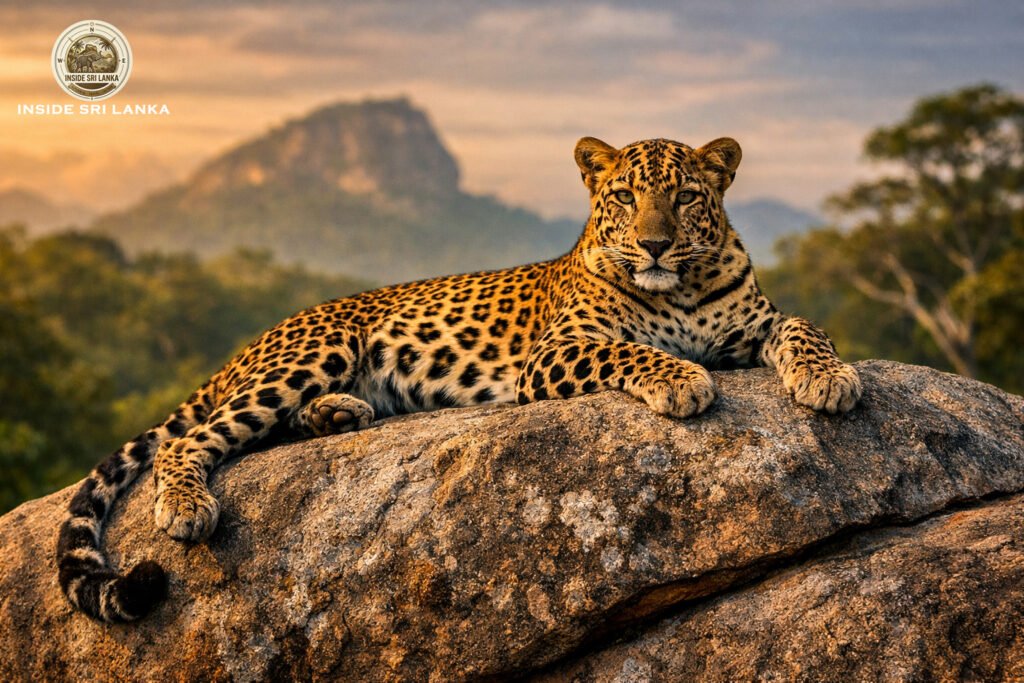
While leopards are found in Africa and other parts of Asia, the Sri Lankan Leopard (Panthera pardus kotiya) is a distinct subspecies. Because we have no lions or tigers to compete with, our leopards have become the undisputed kings of the jungle.
In places like Yala National Park or Wilpattu, these magnificent cats are surprisingly bold. Seeing a full-grown male leopard lounging on a granite rock at dawn is an adrenaline rush like no other. In Sri Lanka, the leopard is not just a ghost in the shadows; it is a majestic ruler that you have a very high chance of spotting if you are patient.
2. The Giants of the Deep: Blue Whale Sightings
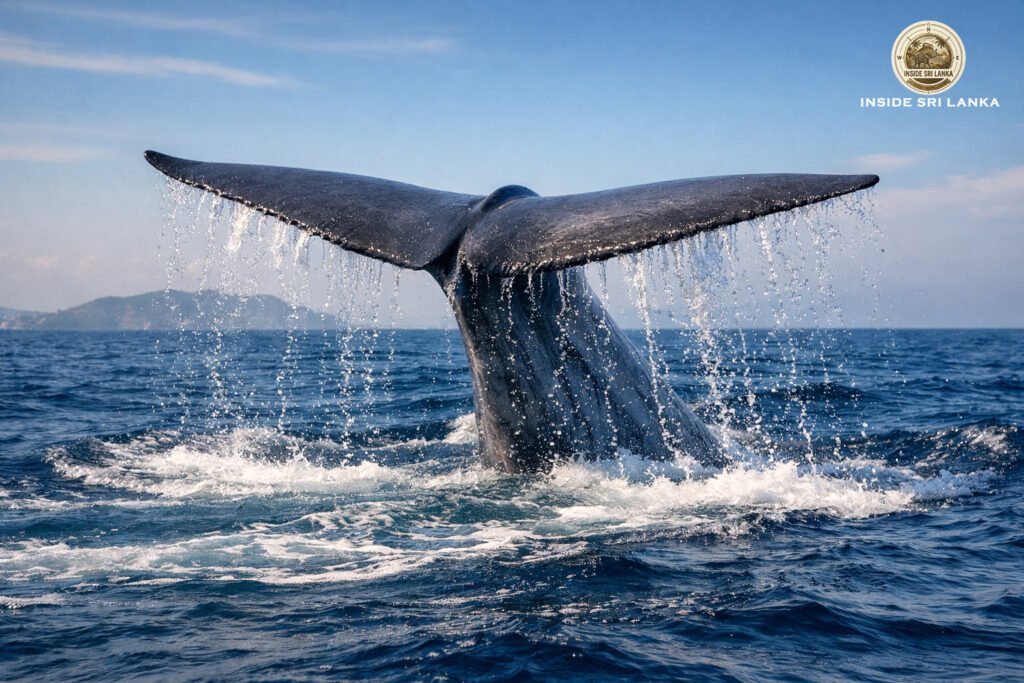
It is one of the greatest coincidences of nature that the world’s largest land mammal (the elephant) and the world’s largest marine mammal (the Blue Whale) can be seen within a few hours of each other in Sri Lanka.
Off the coast of Mirissa and Trincomalee, the continental shelf drops off rapidly, bringing these deep-sea giants incredibly close to the shore. Watching a creature the size of three school buses breach the surface and blow a massive plume of water into the air is a humbling experience. Sri Lanka is now recognized as one of the most reliable places on the planet to see Blue Whales, often accompanied by pods of acrobatic Spinner Dolphins.
3. The Primate of the Mist: Purple-faced Leaf Langur
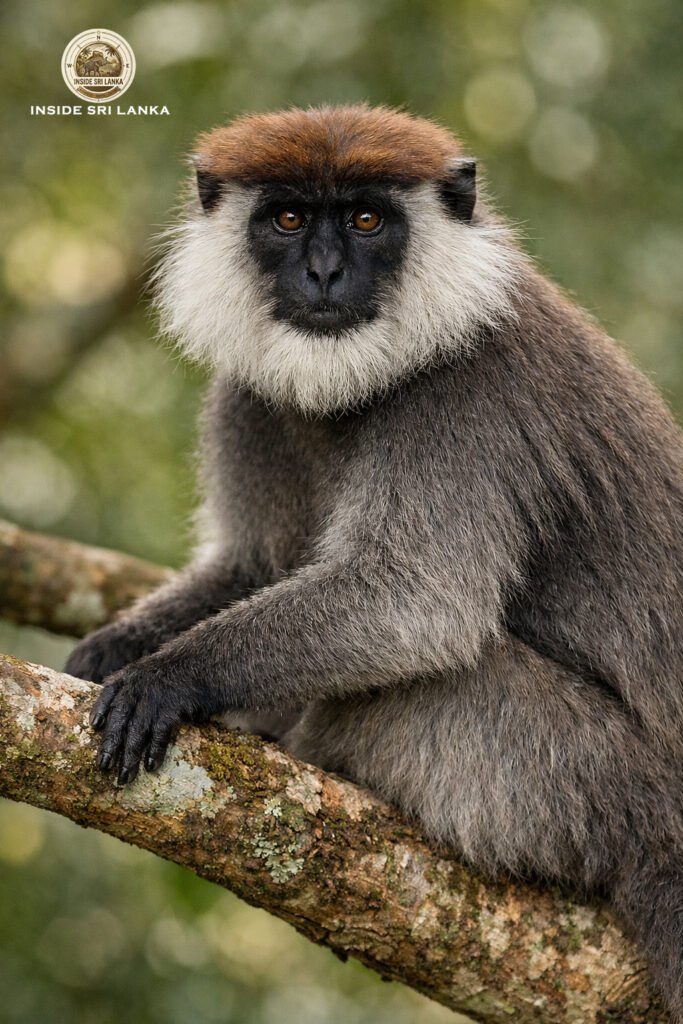
If you head into the misty highlands or even the lush gardens of the wet zone, you might hear a deep, guttural roar that sounds like it belongs to a much larger beast. That is the call of the Purple-faced Leaf Langur, a monkey found only in Sri Lanka.
With its striking white sideburns and dark face, this primate looks like a wise old forest spirit. They are shy, arboreal creatures, meaning they spend most of their lives high in the canopy. Seeing them leap effortlessly between giant tropical trees is a reminder of how untouched some parts of our island remain.
4. The Island King: The Sri Lankan Elephant
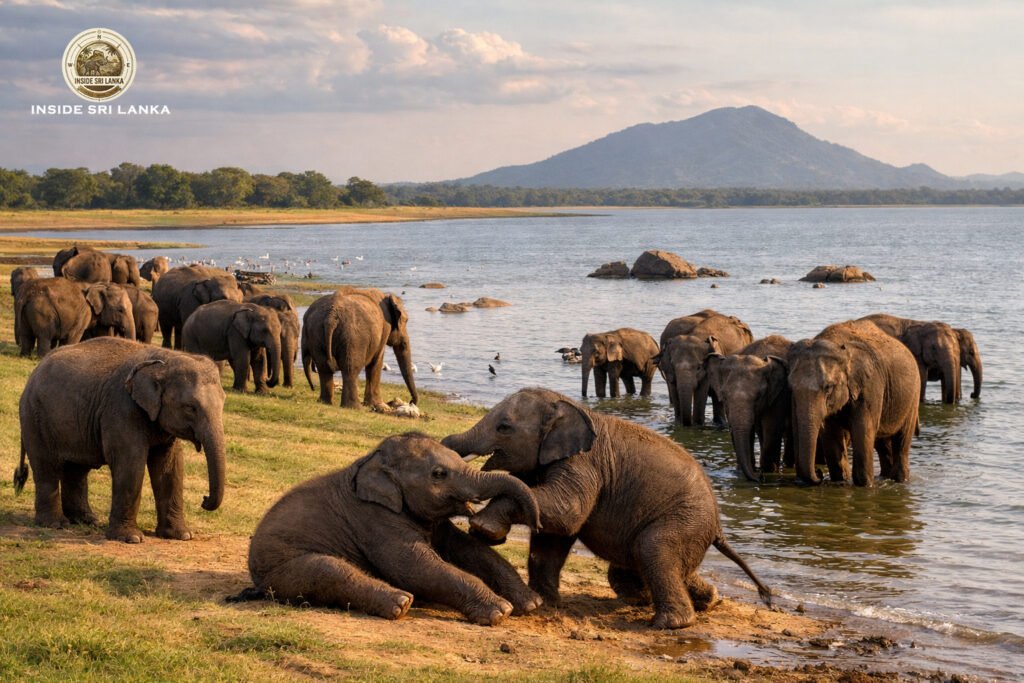
You might have seen elephants in India or Thailand, but the Sri Lankan Elephant is the largest and darkest of the Asian subspecies. These are highly intelligent, social beings that have been part of our culture for millennia.
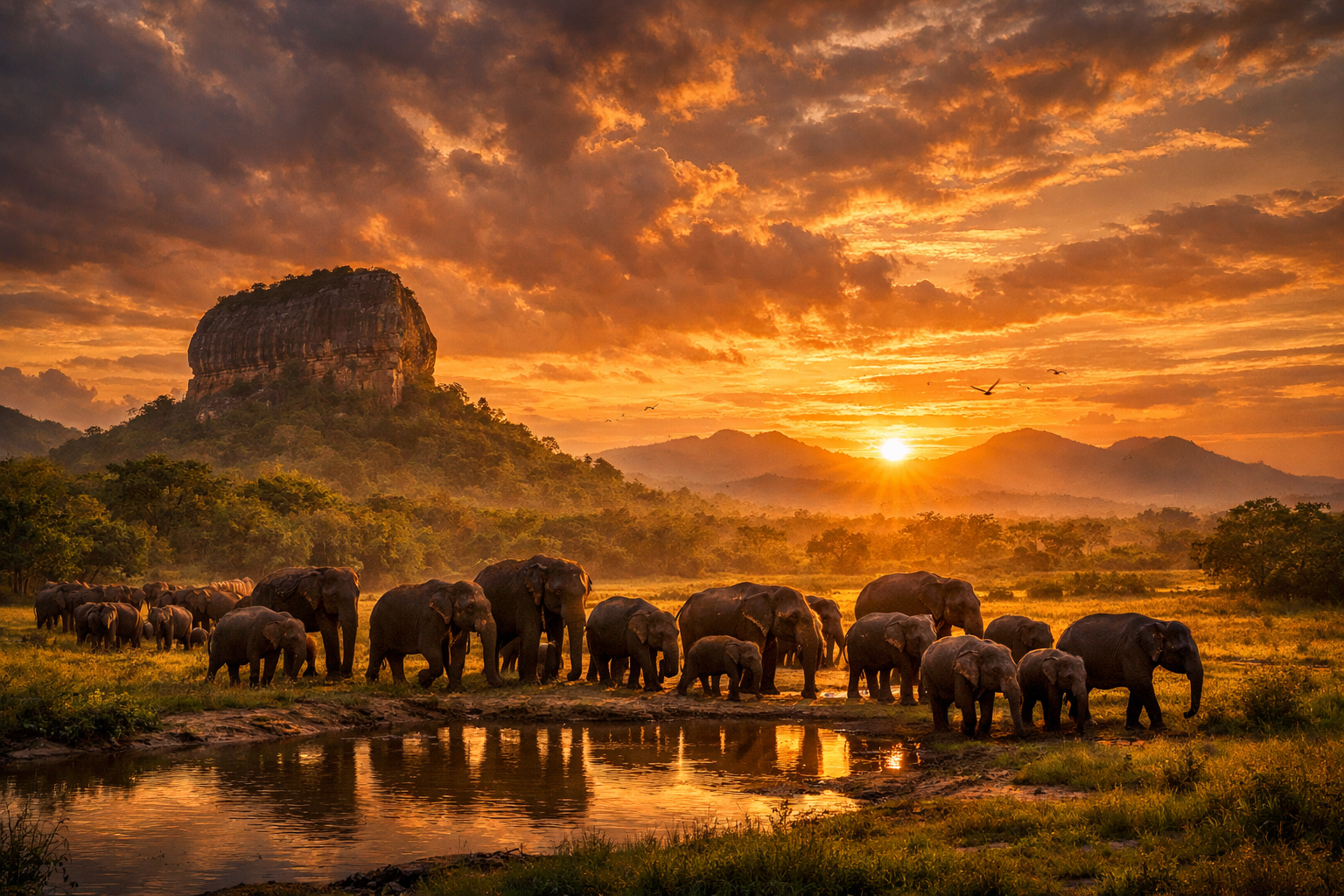
The most spectacular way to see them is “The Gathering” in Minneriya National Park. During the dry season, hundreds of elephants migrate to the receding shores of an ancient reservoir to eat fresh grass, socialize, and bathe. It is the largest gathering of Asian elephants in the world—a literal sea of grey against a golden sunset. It’s not just a safari; it’s a masterclass in animal emotion and family bonds.
5. The Flash of Gold: The Sri Lanka Junglefowl
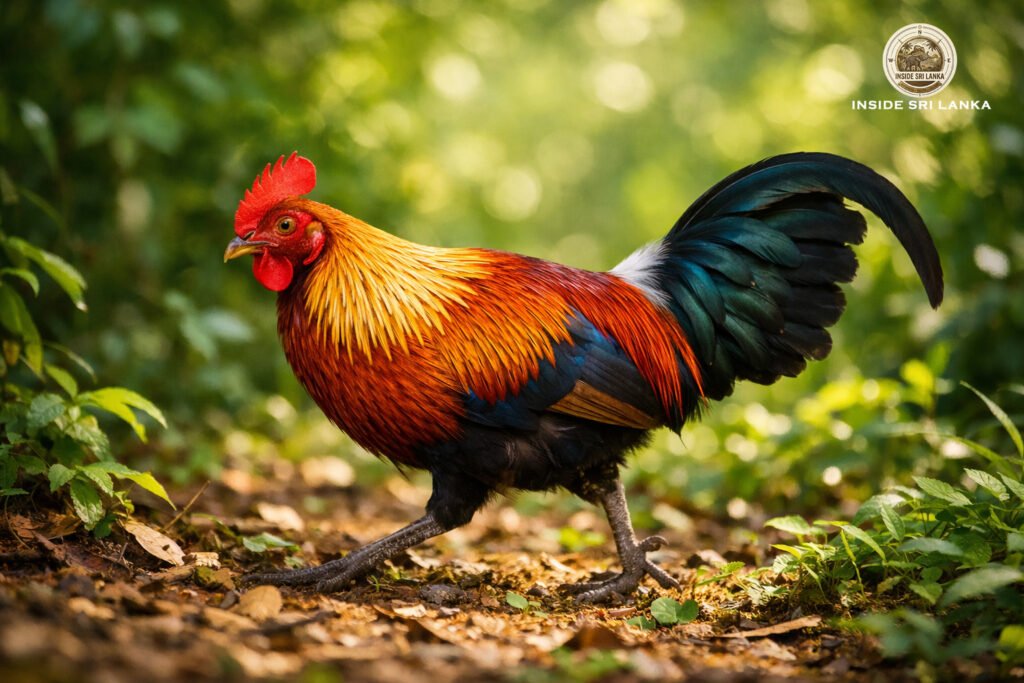
Wildlife isn’t always about the “Big Five.” Sometimes, it’s about the vibrant details. Our national bird, the Sri Lanka Junglefowl, is a perfect example. At first glance, it looks like a colorful rooster, but look closer at its plumage—a shimmering blend of gold, orange, and deep purple.
Endemic to our island, this bird is a symbol of our untamed forests. Encountering one in the wild, perhaps in the Sinharaja Rain Forest, as it scratches through the leaf litter in the morning light, is a treat for any birdwatcher or nature lover. It’s a small but vivid reminder that in Sri Lanka, even the most common-looking creatures have a touch of magic.
Why Sri Lanka’s Wildlife is Different
What truly sets the “Wild Side” of Sri Lanka apart is proximity. You can be in the mountains watching rare monkeys in the morning and by the ocean watching whales by the afternoon. Our island is a living, breathing documentary where every turn in the road could lead to a wild encounter.
Traveler’s Tips for the Wild Side:
- Respect the Space: Always keep a safe distance. These are wild animals, not performers.
- Go with a Local: Local guides have an “eye” for the bush. They can spot a leopard ear in a thicket from 100 meters away.
- Patience is Key: The jungle doesn’t give up its secrets easily. Sometimes the quietest moments lead to the best sightings.
- Pack Light, Pack Right: Neutral-colored clothing (khaki, green, brown) helps you blend in and doesn’t disturb the animals.
Conclusion
Sri Lanka is more than just a travel destination; it is a sanctuary. Whether you are staring into the golden eyes of a leopard or watching a baby elephant play in the mud, these encounters change you. They remind us that we share this planet with incredible, secret inhabitants who deserve our respect and protection.
So, when are you coming to explore the Wild Side?