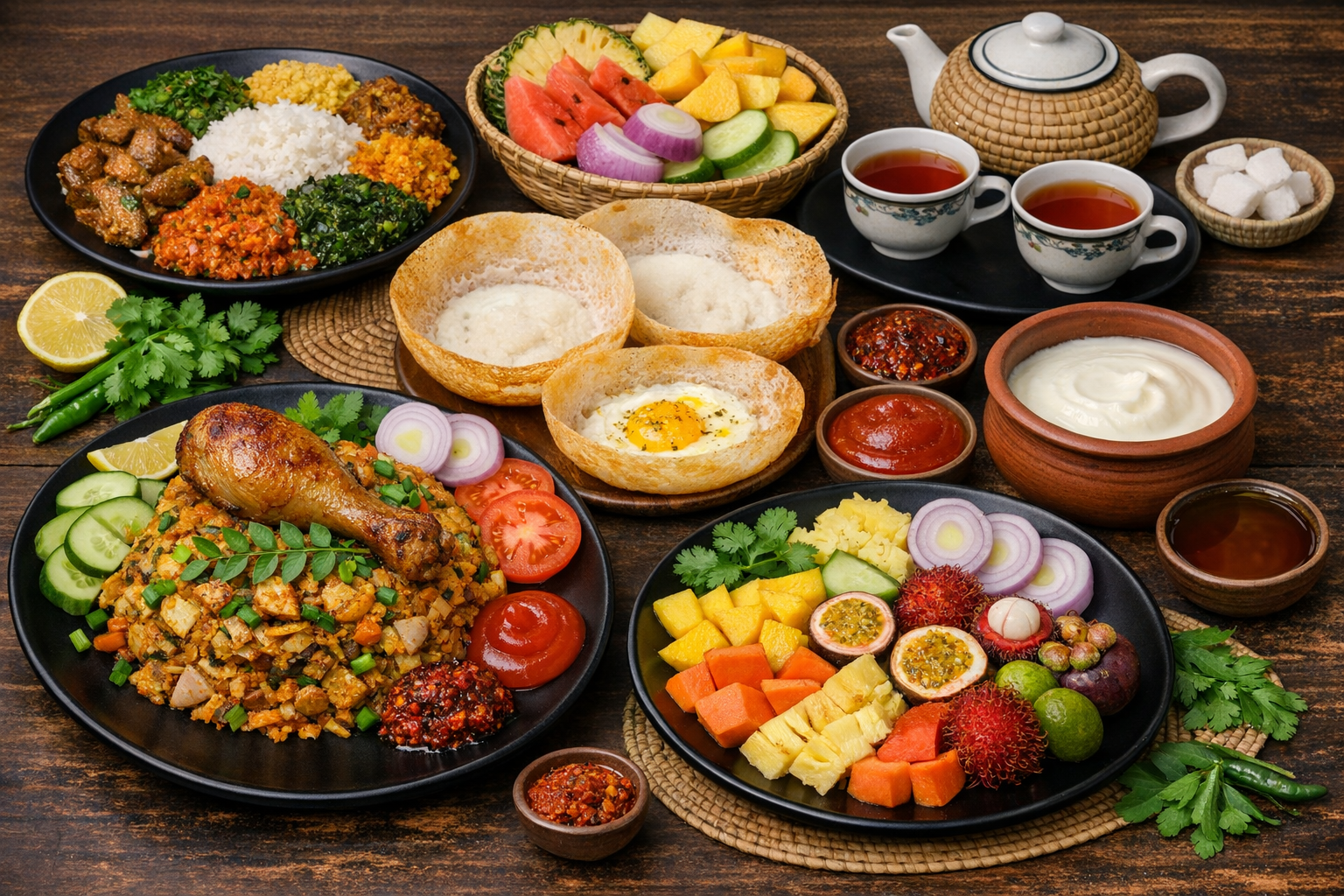
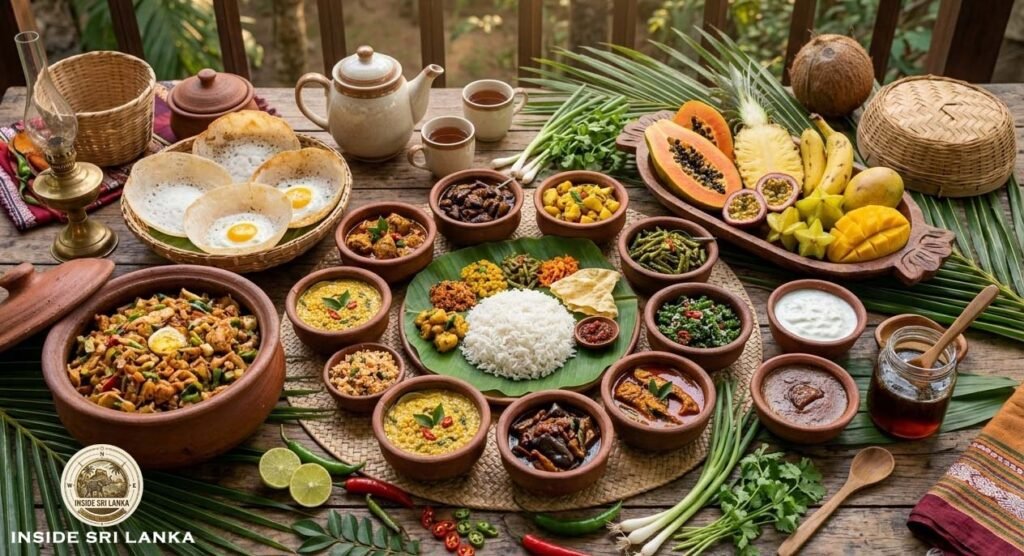
If travel is about discovering the soul of a country, then in Sri Lanka, that soul is found in a clay pot simmering over a wood fire. Sri Lankan cuisine is a vibrant explosion of flavors—a perfect balance of fiery spices, creamy coconut milk, and fresh tropical produce.
In 2026, the island’s food scene is more exciting than ever, blending centuries-old traditions with modern culinary innovation. Whether you are eating a 50-cent snack on a train or dining at a world-class restaurant in Colombo, here is your guide to the must-try “Island Flavors” of Sri Lanka.
1. The National Staple: Rice and Curry
Rice and Curry is not just a meal in Sri Lanka; it is a ritual. It typically consists of a large portion of steamed rice surrounded by 5 to 10 different vegetable curries, a protein (fish, chicken, or dhal), and crispy poppadums.
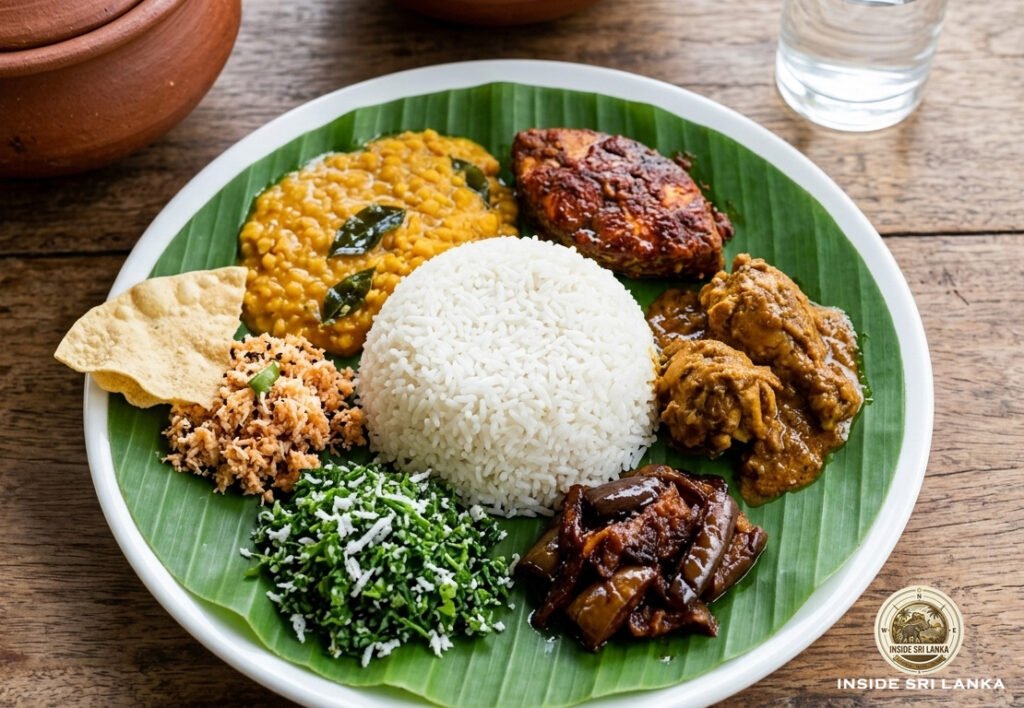
- The Secret Sauce: The use of roasted curry powder and fresh coconut milk gives Sri Lankan curries a depth of flavor you won’t find anywhere else.
- Must-Try: Look for “Ambul Thiyal” (sour fish curry), a unique Southern specialty where fish is marinated in dried goraka (garcinia) to give it a tangy, peppery kick.
- Pro-Tip: For the most authentic experience, look for roadside “Hela Bojun” stalls or family-run guesthouses where the food is cooked in traditional earthenware pots.
2. The Iconic Hopper (Appa)
If there is one dish that defines Sri Lankan street food, it’s the Hopper. These bowl-shaped pancakes are made from a fermented batter of rice flour and coconut milk.
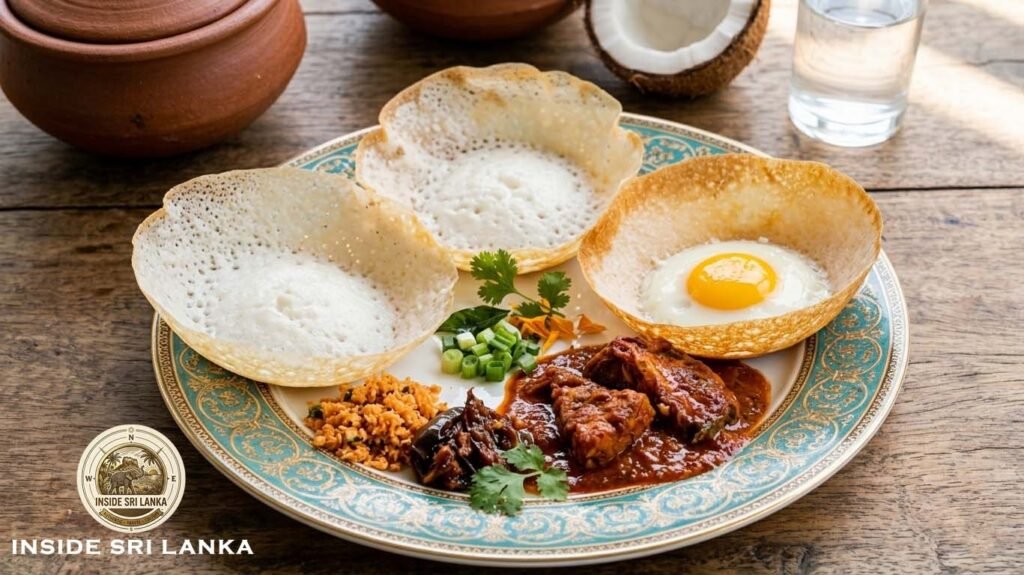
- Plain Hoppers: Crispy on the edges and soft and spongy in the center.
- Egg Hoppers: A whole egg is cracked into the center while cooking—perfect for breakfast or dinner.
- String Hoppers (Idiyappam): These are delicate nests of steamed rice noodles, usually served with a creamy potato curry (Kiri Hodi) and spicy coconut sambol.
3. Kottu Roti: The Sound of the Night
Walk through any Sri Lankan town after sunset, and you’ll hear the rhythmic “clank-clank-clank” of metal blades hitting a flat griddle. That is the sound of Kottu Roti being made.
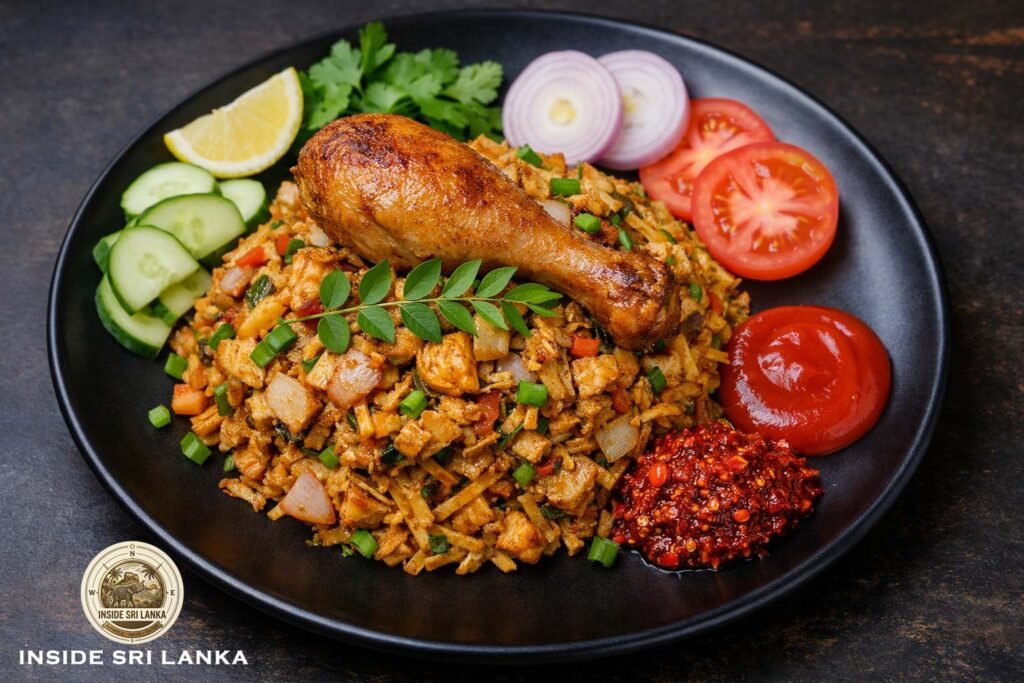
- What is it: It’s a mix of shredded paratha bread, vegetables, eggs, spices, and your choice of meat, all chopped together on a hot plate.
- The Vibe: It is the ultimate comfort food and a legendary “hangover cure” for locals. In 2026, you can find gourmet versions featuring cheese, seafood, or even vegan-friendly mock meats.
4. Sambols: The Spicy Soul
No Sri Lankan meal is complete without a “Sambol”—a fresh relish used to add heat and texture.
- Pol Sambol: A mix of freshly scraped coconut, chili, lime, and red onions. It goes with everything!
- Lunu Miris: A fiery paste of crushed red onions and dried chilies.
- Seeni Sambol: A sweet and spicy caramelized onion relish that provides a beautiful balance to savory dishes.
Sri Lankan Food Map: What to Eat Where
| Region | Must-Try Dish | Flavor Profile |
| South Coast | Coastal Fish Curry (Ambul Thiyal) | Sour & Peppery |
| Hill Country | Fresh Estate Tea & Scones | Sweet & Refreshing |
| Jaffna (North) | Crab Curry (Jaffna Style) | Fiery & Aromatic |
| Colombo | Kottu Roti / Street Snacks | Savory & Spicy |
5. Ceylon Tea: The Golden Brew
Sri Lanka is the home of the world-famous Ceylon Tea. In the cooler highlands of Nuwara Eliya and Ella, you can visit tea factories that have been operating since the British era.
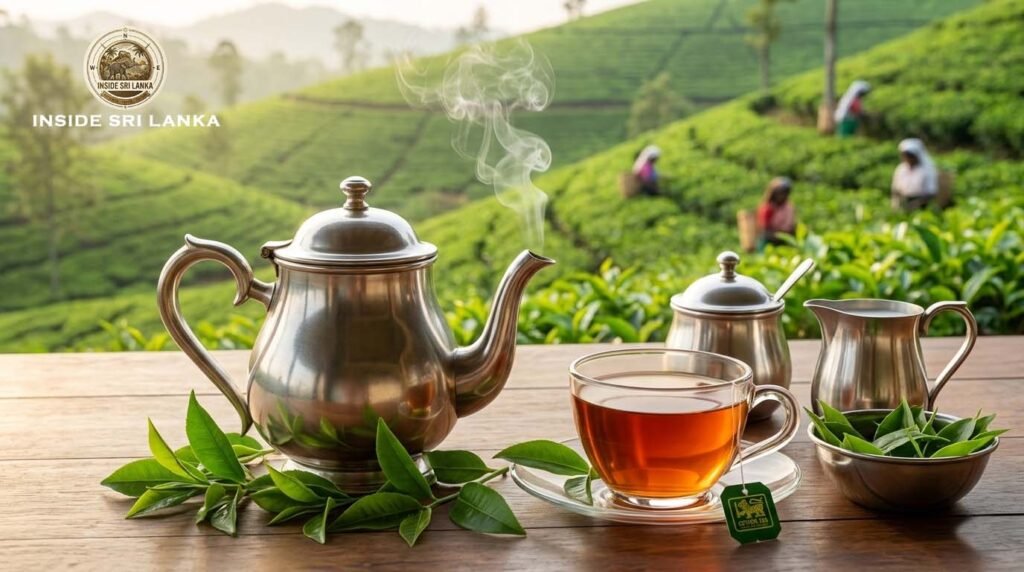
- The Experience: Sip a hot cup of “BOP” (Broken Orange Pekoe) while looking out over rolling green hills. In 2026, tea tourism has evolved to include tea-tasting sessions that are as sophisticated as wine-tastings.
6. Tropical Fruits & Drinks
The island’s fertile soil produces an incredible variety of fruits year-round.
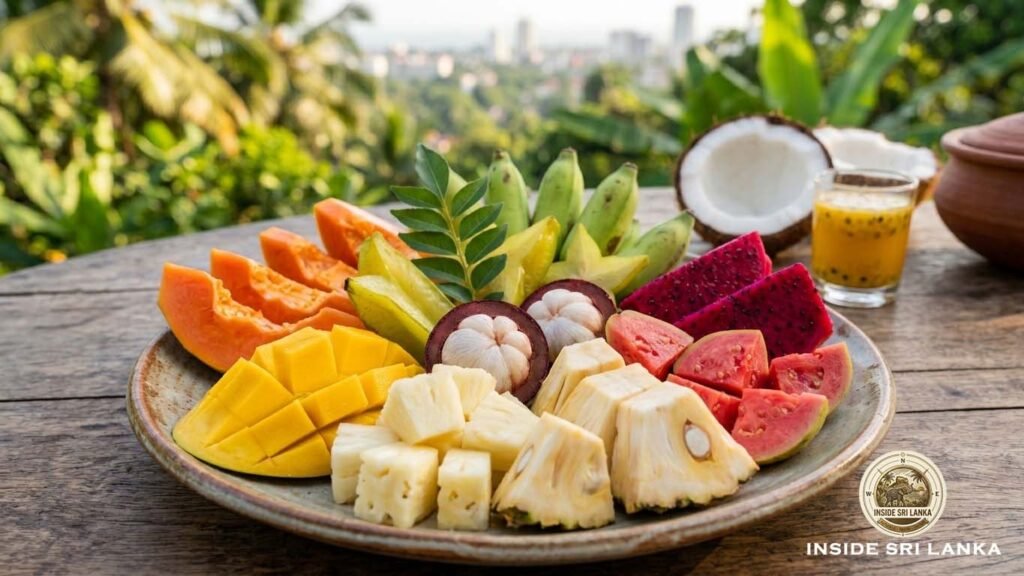
- King Coconut (Thambili): The ultimate natural hydrator. Look for the bright orange nuts sold by the roadside.
- Exotic Picks: Don’t leave without trying Mangosteen, Rambutan, or the “love it or hate it” Durian during their respective seasons.
- Woodapple Juice: A unique, thick, and slightly tart juice made from the hard-shelled woodapple fruit—a true local favorite.
7. Sweet Endings: Watalappam & Curd
Sri Lankan desserts are often heavy on jaggery (unrefined palm sugar) and spices.
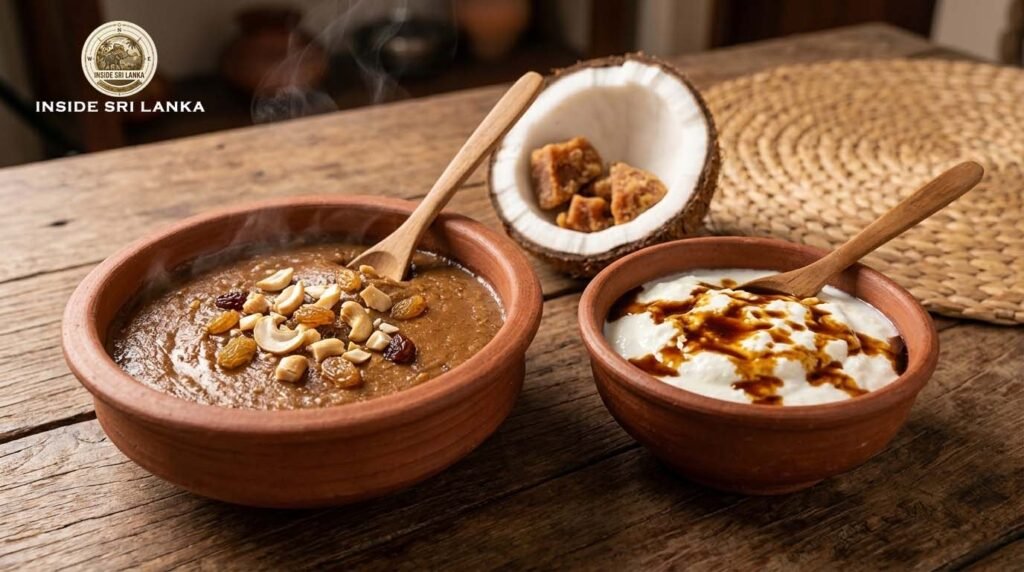
- Watalappam: A rich, steamed custard made with coconut milk, jaggery, eggs, and spices like cardamom and nutmeg. It’s a staple during festival seasons.
- Curd and Treacle: Buffalo curd served in clay pots, topped with golden Kithul treacle (syrup from the fishtail palm). It’s simple, cooling, and delicious.
Foodie Etiquette: Eating Like a Local
- Use Your Hands: While cutlery is available, locals believe that eating with your right hand enhances the flavor and experience. Give it a try!
- The “Spice” Level: If you aren’t used to heat, always ask for “mild” or “tourist spicy.” Sri Lankan “medium” is often very hot for foreigners!
- Hydration: Always stick to bottled or filtered water. King Coconut water is a safe and delicious alternative.
Conclusion: A Journey Through Taste
The flavors of Sri Lanka are a reflection of its people—warm, diverse, and unforgettable. Whether you are crunching on a spicy “Short Eat” (snack) on a train or enjoying a royal feast in a colonial bungalow, the island’s cuisine will be one of the highlights of your 2026 trip. So, come with an open heart and an empty stomach!