
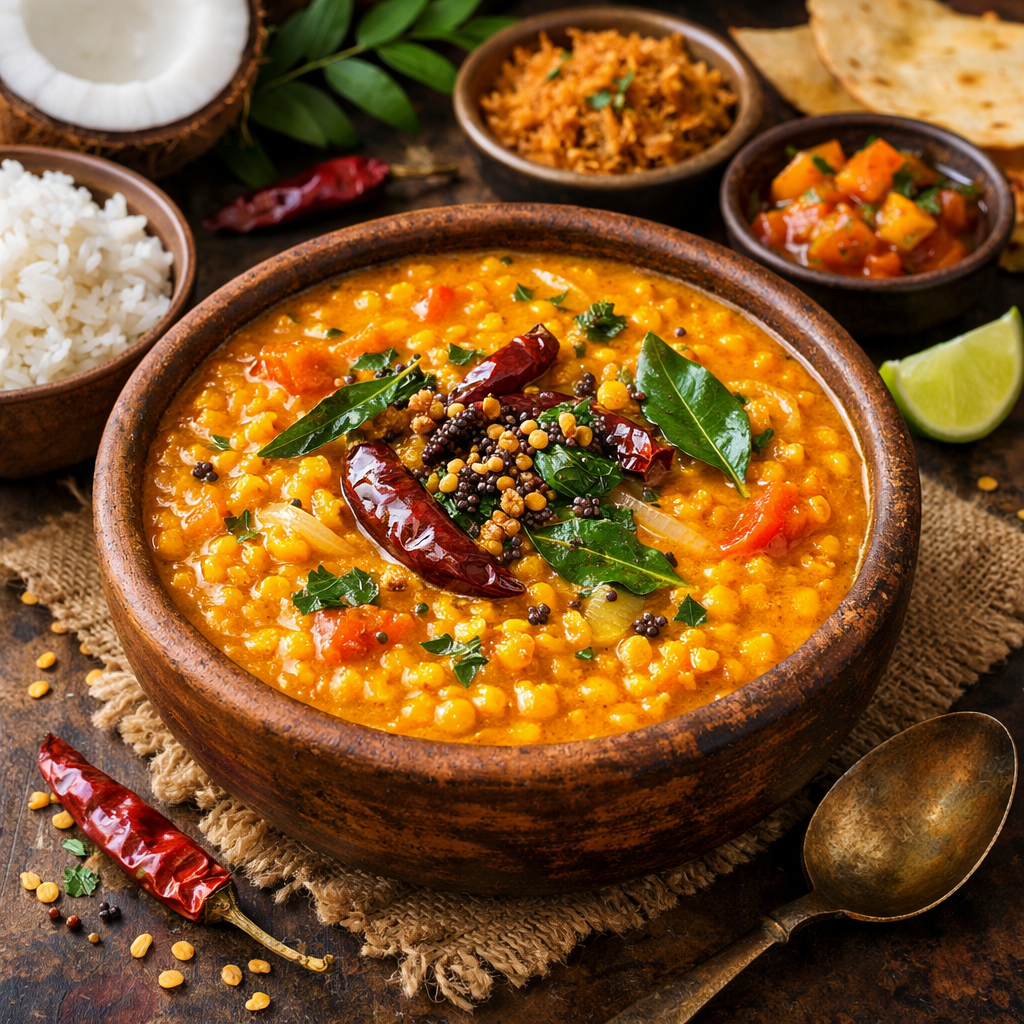
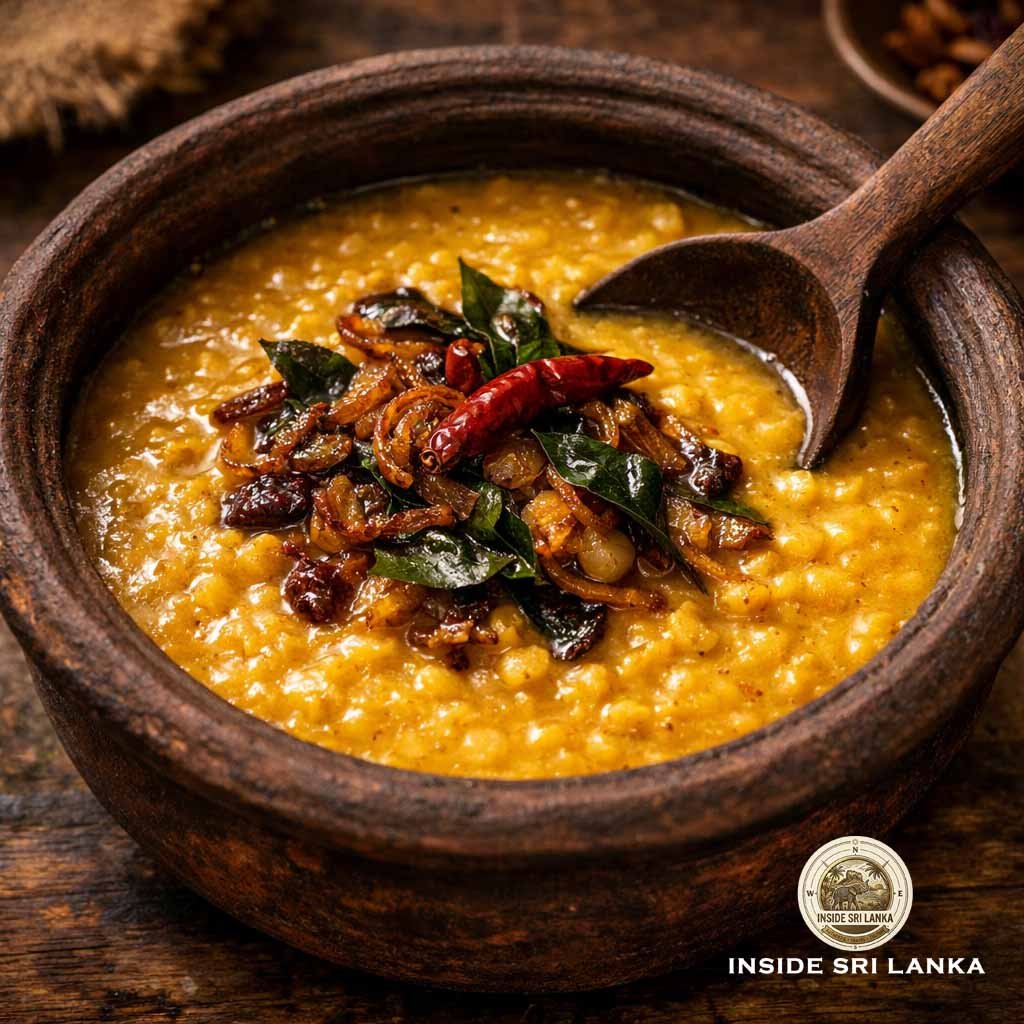
In every Sri Lankan household, there is one sound that signals the start of a meal: the washing of lentils in a clay pot. If you’ve ever stepped into an island kitchen, you know the smell—a mix of earthy turmeric, spicy mustard seeds, and the heavenly aroma of fresh curry leaves hitting hot oil.
For most of the world, “Dhal” is just a lentil soup. But for us Sri Lankans, Parippu (as we call it) is the soul of the plate. It’s the creamy, golden glue that holds the entire rice and curry meal together. Today, I’m taking you behind the scenes of my own kitchen to show you how to make the perfect, authentic Sri Lankan Dhal Curry, seasoned with memories and island secrets.
A Childhood Memory in a Clay Pot
I still remember waking up to the smell of my grandmother’s kitchen in Habarana. She didn’t use measuring cups or timers; she cooked by “feeling.” She used to say, “Parippu follows the heart.” If you are angry, the curry comes out too salty. If you are in a hurry, the lentils stay hard.
The secret to our Dhal isn’t just the spices—it’s the clay pot (Valan). Cooking in clay adds an alkaline sweetness to the lentils that stainless steel simply can’t replicate. It breathes life into the curry.
The Ingredients: Nature’s Golden Palette
To make a Dhal curry that a Sri Lankan would approve of, you need specific ingredients. You can’t just substitute whatever is in the pantry.
- Red Split Lentils (Masoor Dhal): These cook fast and turn into a beautiful creamy mash.
- Coconut Milk: This is the game-changer. We use two types: “Miti Kiri” (thick first extract) and “Diya Kiri” (thin second extract).
- Turmeric (Kaha): Not just for color, but for its antiseptic and earthy notes.
- The “Trinity” of Sri Lankan Aromatics: Curry leaves (Karapincha), Pandan leaves (Rampe), and Cinnamon.
- Tempering Staples: Small red onions (shallots), dried red chilies, and mustard seeds.
The Secret Process: Step-by-Step
1. The Golden Wash
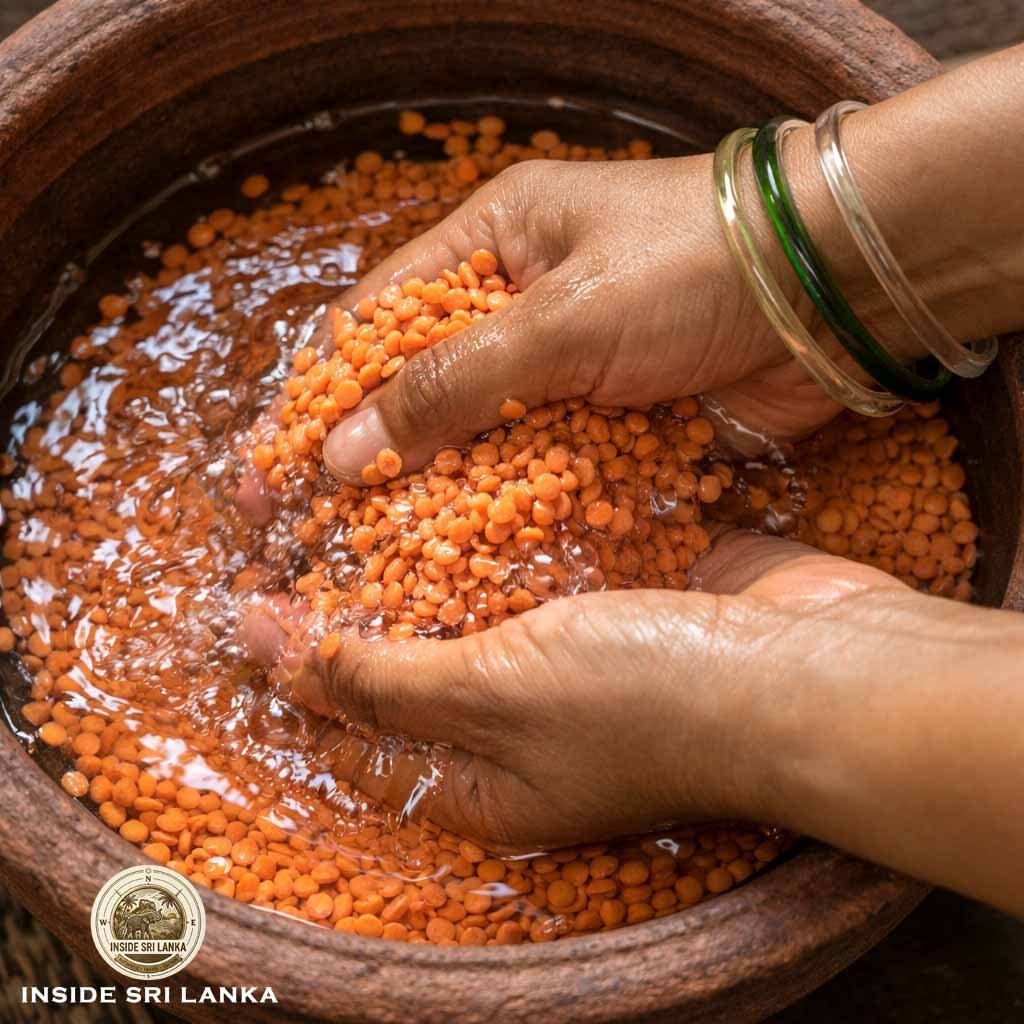
The first step is washing the lentils. You have to wash them until the water runs clear. My grandmother used to do this three times. Why? Because it removes the excess starch, ensuring the curry is creamy but not “gluey.” Once washed, add just enough water to cover them, a pinch of turmeric, and a few slices of green chili and onion.
2. The Slow Simmer
Put it on a medium flame. This is where most people go wrong—they rush it. You want the lentils to absorb the water and swell up until they are soft enough to mash with a spoon. Don’t add salt yet! Adding salt too early can make the lentils stay tough.
3. The Magic of Coconut Milk
Once the water is almost gone, add the thin coconut milk. Let it simmer until it thickens. Now, add the thick coconut milk (Miti Kiri) and the salt. The curry will turn into a beautiful, rich gold. The moment it starts to bubble, take it off the fire. You don’t want to “boil” thick coconut milk for too long, or it will lose its sweetness.
The “Thala” (The Tempering) – The Final Flourish
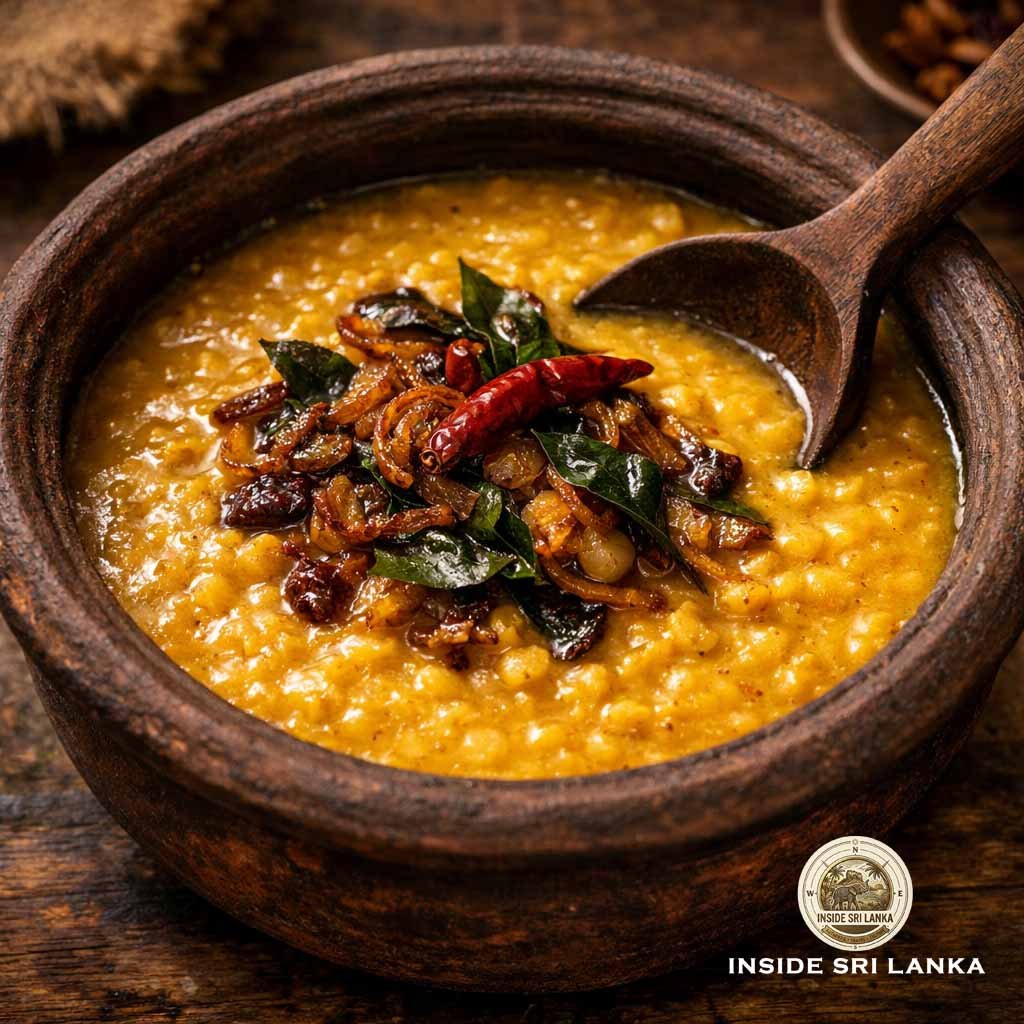
In Sri Lanka, we call this the “Themparaduwa.” This is where the flavor goes from 10 to 100.
In a separate small pan, heat some coconut oil. Throw in the mustard seeds—wait for them to pop like tiny firecrackers. Add the sliced shallots, dried red chilies, and the star of the show: fresh curry leaves. The second those onions turn golden brown, pour the whole sizzling mixture into the dhal pot. The “shhhh” sound it makes is the most satisfying sound in the world. Close the lid immediately for two minutes to trap all that smoky aroma inside.
How to Eat It: The Authentic Way
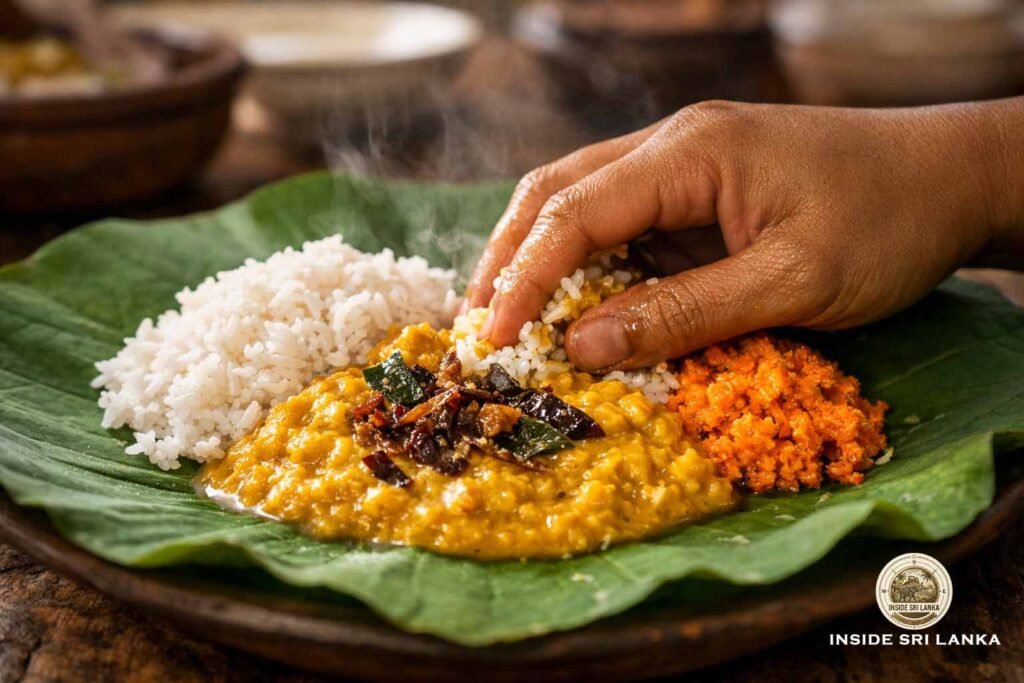
If you are using a fork to eat Dhal curry, you are doing it wrong! The best way to enjoy this is with your hands. Mix a generous spoonful of dhal with some hot white rice and maybe a piece of fried fish or a spicy Pol Sambol (okay, I mentioned it again, but it’s essential!).
The creaminess of the dhal balances the heat of the chili, creating a perfect harmony in your mouth. It’s the ultimate comfort food. It’s what we eat when we are tired, when we are celebrating, or when we just want to feel “at home.”
Why This Matters for Your Health
Beyond the taste, this curry is a nutritional powerhouse. Lentils are packed with protein and fiber. Turmeric is a natural anti-inflammatory, and the healthy fats in coconut milk are great for your brain. In our villages, a bowl of dhal is often the first solid food we give to babies—it’s that gentle and nourishing.
Conclusion: A Taste of the Island
So, the next time you think of “Island Flavors,” don’t just think of fancy seafood or exotic fruits. Think of the humble Parippu. It’s a dish that costs very little but offers a wealth of tradition and taste.
If you ever visit us in Habarana, I’ll make sure a clay pot of golden dhal is waiting for you. Because in Sri Lanka, food isn’t just about hunger—it’s about hospitality.