
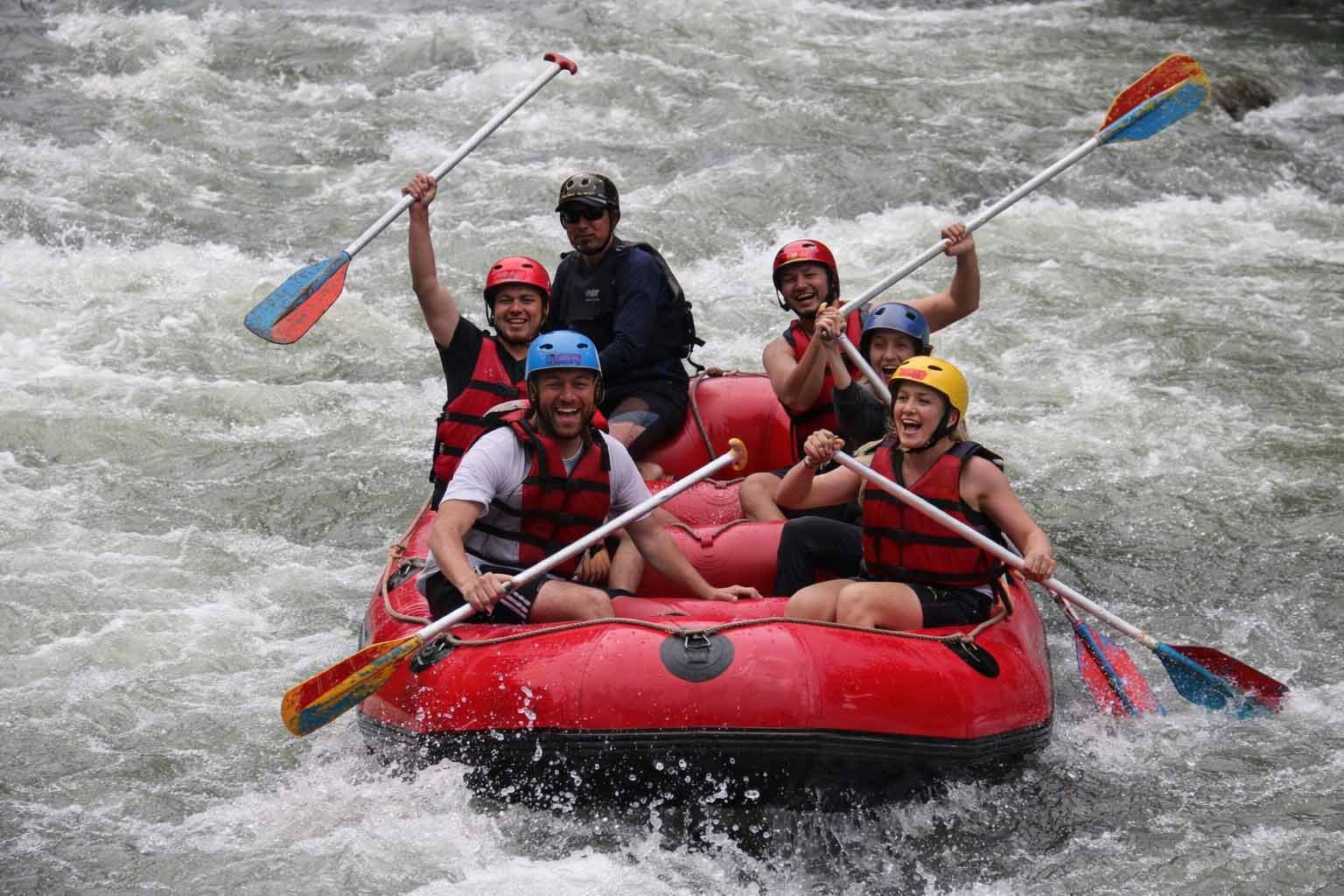
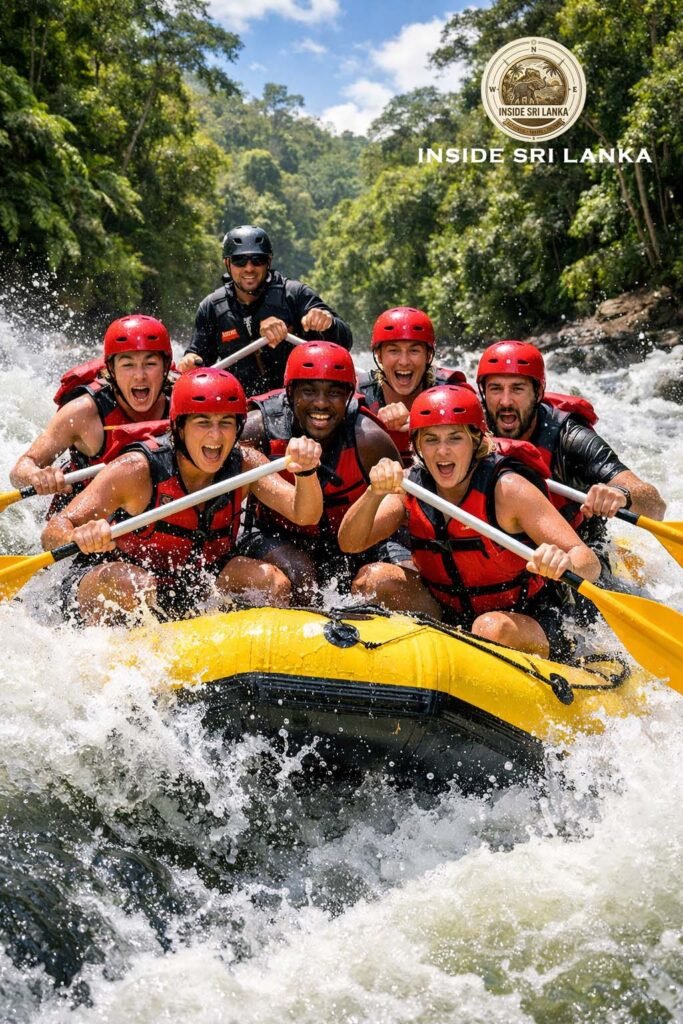
If your idea of a perfect vacation involves high-adrenaline action, rushing rivers, and breathtaking tropical scenery, then there is one place in Sri Lanka you absolutely cannot miss: Kitulgala. Tucked away in the wet zone rainforests just a few hours from Colombo and Kandy, Kitulgala is the undisputed adventure capital of the island.
The main attraction here is white water rafting on the Kelani River. It is a thrilling experience that challenges your limits while surrounding you with pristine jungle views. Whether you are a seasoned rafter or a complete beginner, Kitulgala promises an unforgettable rush.
In this ultimate guide, we will break down what to expect, the rapids you will face, safety standards, and practical tips to plan your adventure.
1. The Kelani River: The Perfect Rafting Playground
The Kelani River in Kitulgala features a unique stretch of water that is ideal for white water rafting. The river runs through a mix of calm pools and turbulent rocky stretches, creating the perfect natural rollercoaster.
What makes this location iconic is not just the water, but the history. Kitulgala’s lush backdrop was the primary filming location for the 1957 Academy Award-winning movie, The Bridge on the River Kwai. As you paddle down the river, you are literally rafting through cinematic history.
2. Navigating the Rapids: What to Expect
The standard rafting run in Kitulgala covers about 5 kilometers (3.1 miles) of the river and includes 5 major rapids and 4 minor rapids. These are classified as Grade 2 and Grade 3 rapids, meaning they are exciting and bumpy but perfectly safe for beginners and non-swimmers.
Here are the famous rapids you will conquer during your run:
- Head Chopper: Don’t let the scary name fool you! This rapid is fast and bouncy, requiring quick paddling and teamwork.
- Virgin’s Breast: A fun, rolling rapid that creates massive splashes, soaking everyone in the raft.
- Killer Fall: The most intense rapid on the run. It features a sudden drop and a rush of white foam that requires focus and strong paddling to clear.
- Butter Crunch: A smooth but fast-moving rapid that provides a great finish to the turbulent section of the river.
Between these white-knuckle stretches, the river calms down into deep, slow-moving pools. During these breaks, your guide will often invite you to jump out of the raft and body-surf down the river, floating lazily under the jungle canopy.
3. Safety First: Choosing the Right Operator
While white water rafting is an incredible thrill, water sports always carry a level of risk. Therefore, choosing a reputable, licensed adventure camp is critical.
The Equipment
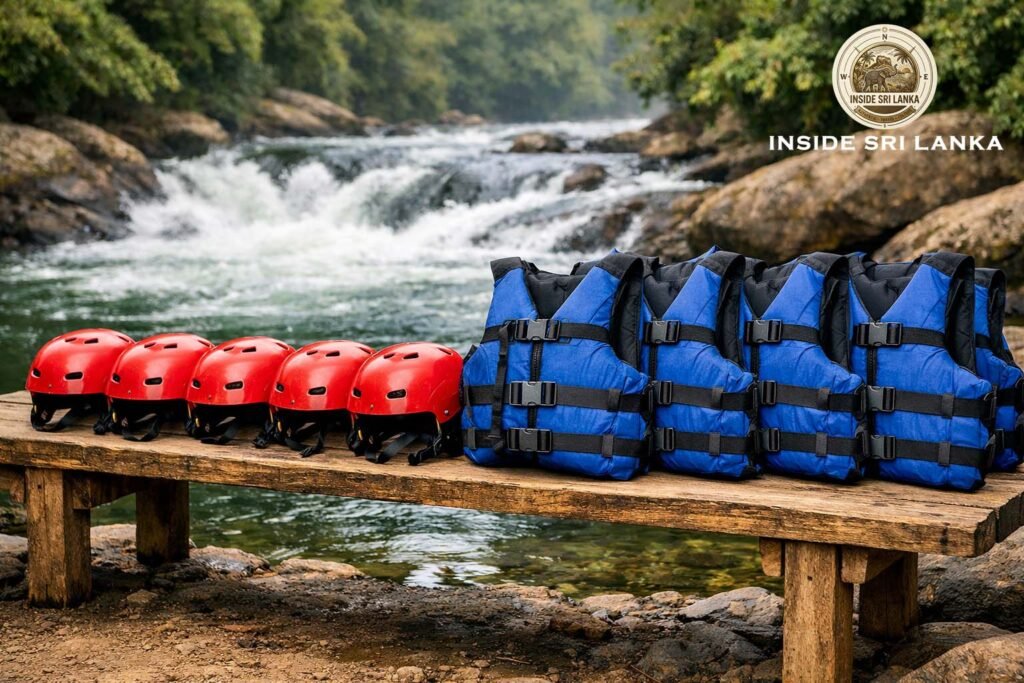
A professional operator will always provide top-tier safety gear. This includes internationally approved Type V Personal Flotation Devices (Life Jackets) and heavy-duty whitewater helmets. The rafts themselves should be modern, self-bailing vessels.
The Guides
Never go out on the river without an experienced, certified river guide. These professionals undergo rigorous training in swift-water rescue, first aid, and river navigation. They sit at the back of your raft, giving clear commands like “Forward hard!”, “Hold on!”, or “Lean in!” Listen to them carefully, and you will have a safe, smooth ride.
4. Beyond Rafting: The Kitulgala Adventure Package
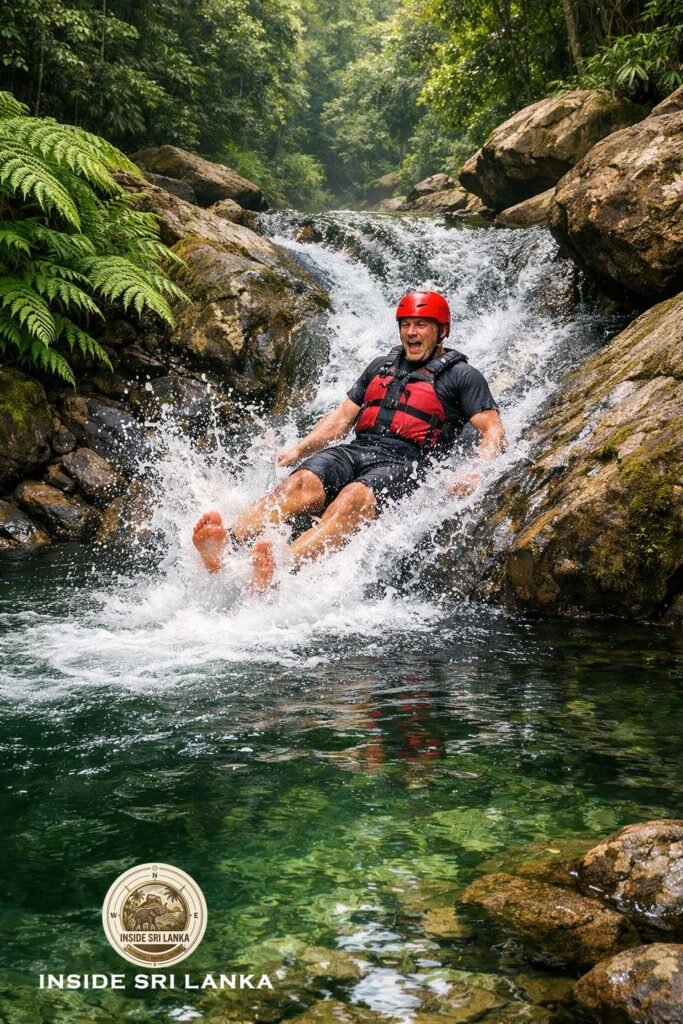
If you make the trip to Kitulgala, you shouldn’t stop at just rafting. Most adventure centers offer full-day multi-sport packages that showcase the wild side of the region:
- Confidence Jumping and Canyoning: This involves trekking deep into a rainforest creek, sliding down smooth natural rock waterslides, and jumping off waterfalls into deep, emerald-green rock pools.
- Rainforest Trekking: Exploring the Makandawa Forest Reserve, a prime birdwatching spot home to rare endemic species like the Sri Lanka Blue Magpie and the Chestnut-backed Owlet.
- Waterfall Abseiling: Strapping into a harness and climbing down the face of a rushing waterfall, such as Sandun Ella.
Practical Guide for Travelers
Best Time to Visit
Kitulgala can be visited year-round, but the water levels change drastically based on the monsoons. The best windows are from January to April and August to September. Avoid peak monsoon seasons (May to June and October to November) as heavy rains can cause the river to flood, making it too dangerous for commercial rafting.
What to Wear and Pack
- Clothing: Lightweight, quick-drying athletic clothes (shorts and a t-shirt or rash guard). Avoid heavy cotton or denim, which stays wet and weighs you down.
- Footwear: Strapped sandals or old sneakers with good grip. Flip-flops will immediately float away in the river.
- Change of Clothes: Bring a complete change of dry clothes and a towel for after the safari. Most camps have clean changing rooms and showers.
- GoPro/Waterproof Camera: If you want to capture the action, ensure your camera has a secure chest or helmet mount. Loose selfie-sticks are easily lost in the rapids.
How to Get There
Kitulgala is strategically located along the A7 highway, making it an easy stopover. It is roughly a 2.5-hour drive from Colombo and about 2 hours from Kandy or Nuwara Eliya. You can easily hire a private taxi or take a public bus heading towards Hatton or Nuwara Eliya from Colombo.
The Verdict: Is Kitulgala Worth the Detour?
Absolutely. If your Sri Lankan itinerary is heavily focused on ancient temples and tea estates, Kitulgala provides the perfect, high-energy contrast. It breaks up the cultural travel with raw, natural excitement. Standing at the riverbank, hearing the roar of the water, and paddling through the waves with your friends is an bonding experience like no other.
Pack your bags, prepare to get soaked, and dive into the ultimate wet and wild adventure of a lifetime!