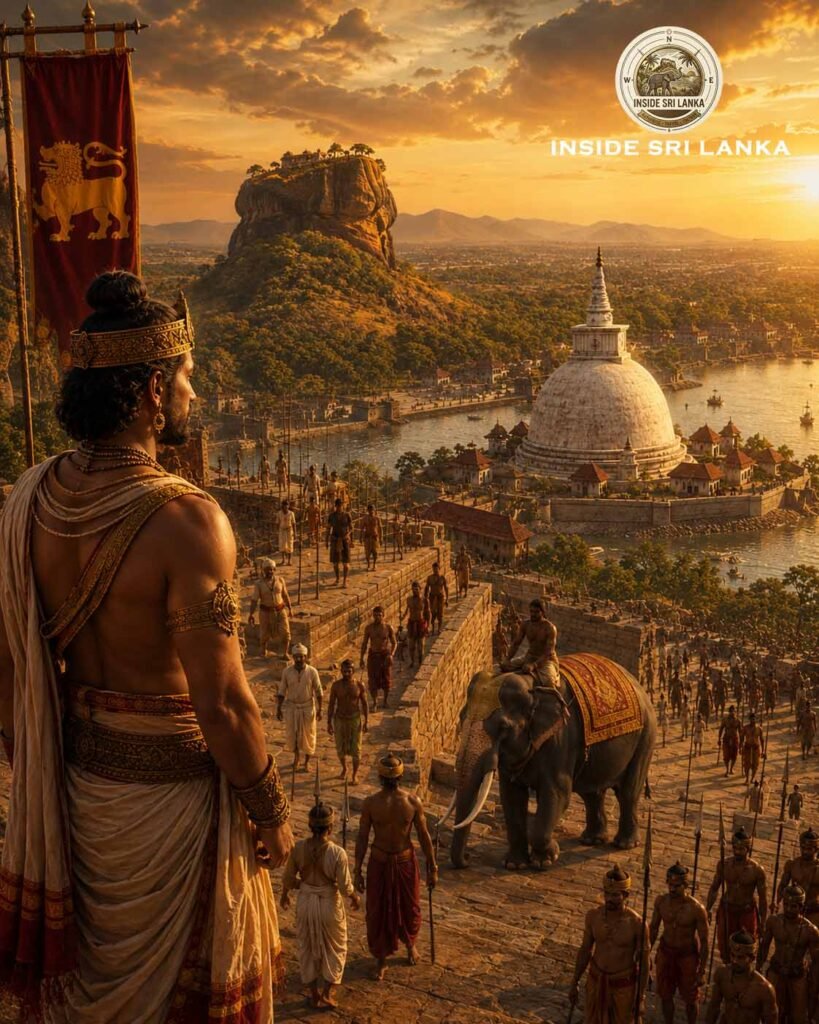
When we think about the history of Sri Lanka, our minds often wander to the grand tales of old chronicles, the arrival of Prince Vijaya, or the mythical, high-tech kingdom of King Ravana. While these legends form a beautiful part of our cultural identity, the true, scientifically verified history of Sri Lanka is far older—and much more mind-blowing—than any myth.
Long before kings built massive stone reservoirs and towering stupas, a highly advanced, physically powerful group of prehistoric humans called this island home. Today, modern cutting-edge archaeology, radiocarbon dating, and genetic mapping have uncovered the “ancient secrets” of Sri Lanka’s true absolute beginnings.
Here is the true story of how human life actually began on our island, proven by the very earth we walk on.
1. The Dawn of Time: When Sri Lanka was Connected to India
To understand the absolute first signs of life, we have to look back hundreds of thousands of years. Geologically, Sri Lanka was not always an isolated island. Over the last several hundred thousand years, the sea levels dropped drastically during different ice ages on multiple separate occasions. This created a massive, dry land bridge across what we now know as the Palk Strait, physically connecting Sri Lanka to southern India.
Animals and early human ancestors walked across this land bridge, migrating back and forth.
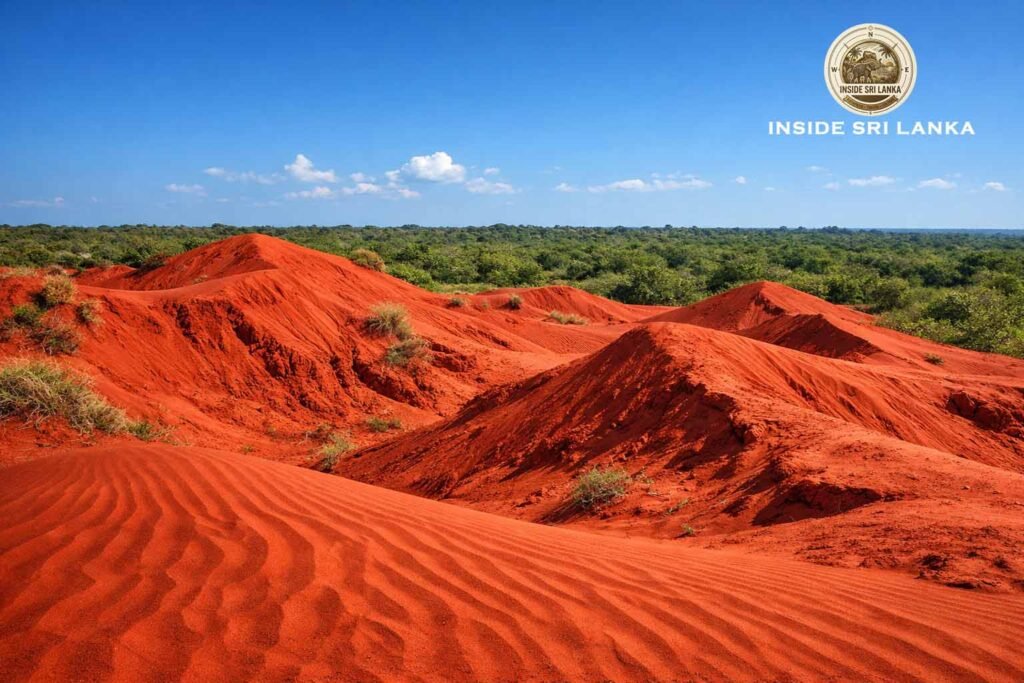
- The 500,000 BC Secret: Leading paleontologists and experts discovered stone tools made of quartz and chert in the coastal red sand dunes of the Iranamadu Formation and Bundala in the deep south.
- These ancient tools prove that early human species were actively hunting and living in Sri Lanka anywhere from 125,000 to over 500,000 years ago. This is the absolute oldest evidence of a human presence on the island.
2. Enter “Balangoda Man”: South Asia’s First Modern Humans
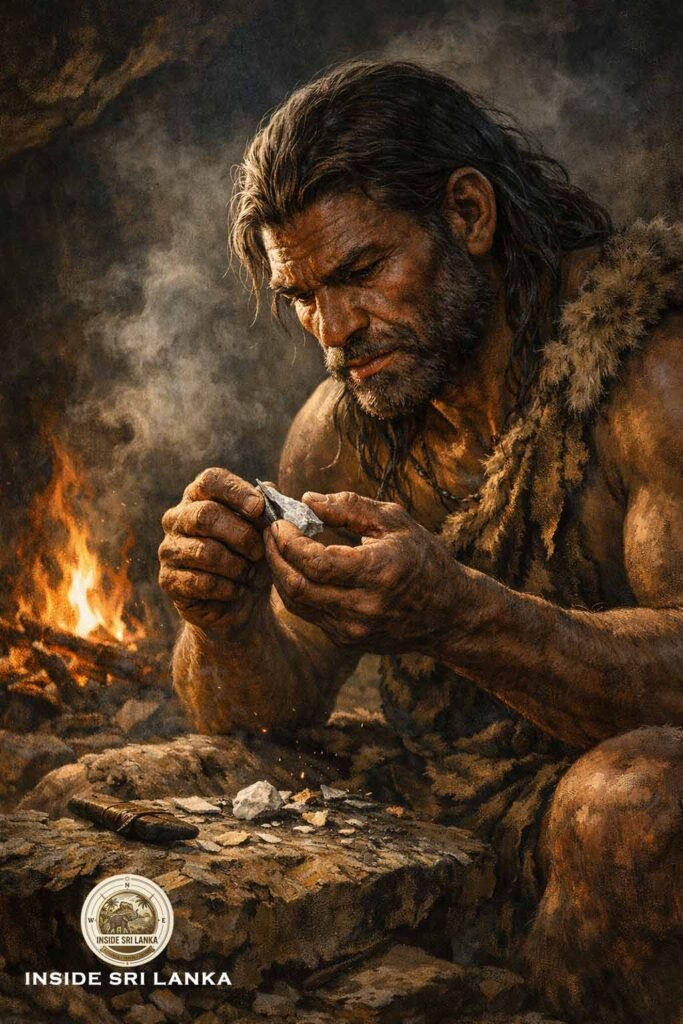
While early hominids laid the foundation, the real breakthrough in Sri Lankan human evolution happened around 38,000 to 40,000 years ago. This was the era of Balangoda Man (Homo sapiens balangodensis).
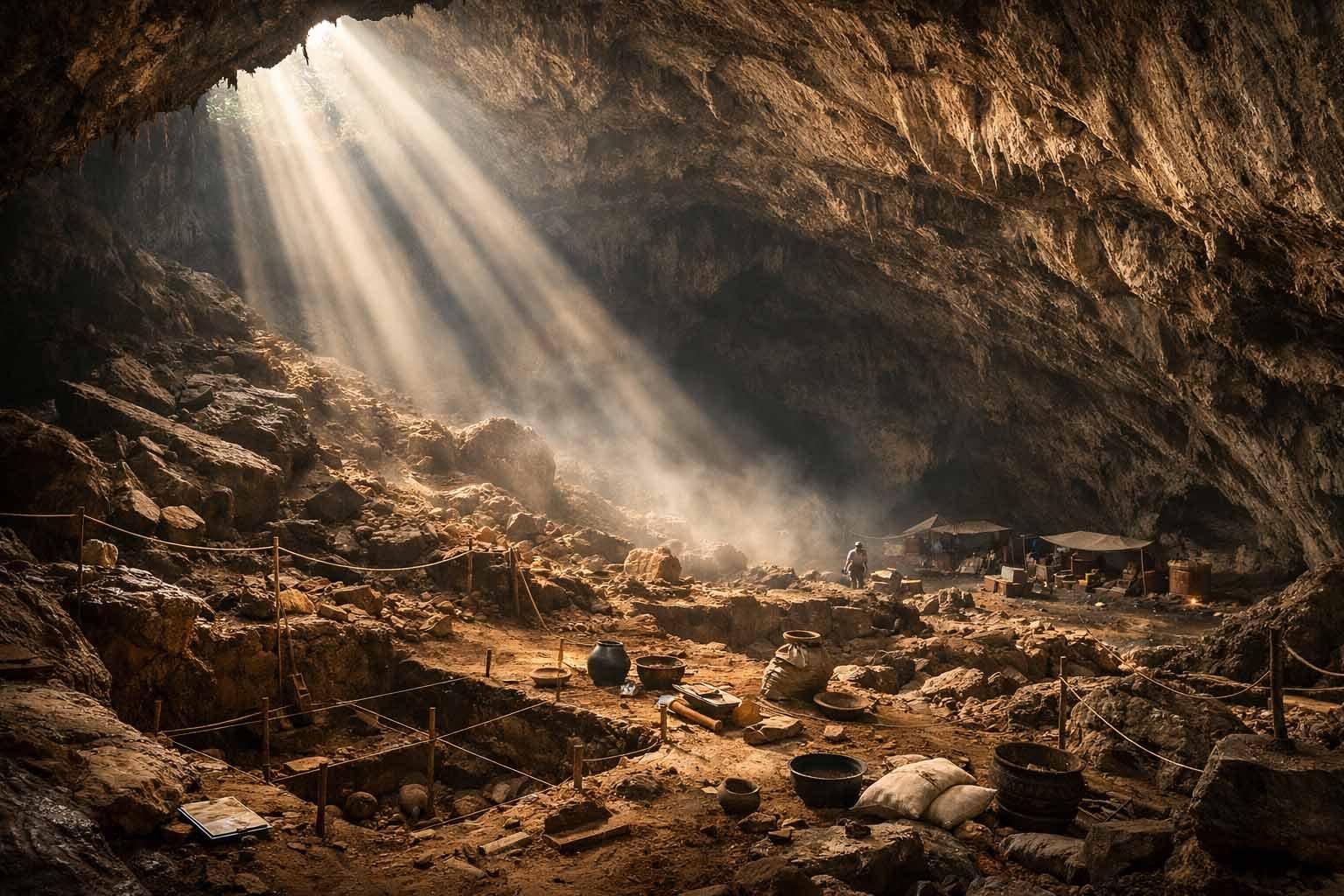
Balangoda Man is not a myth. Their fossilized skeletal remains, teeth, and tools have been excavated and verified by international scientists. In fact, the oldest skeletal remains of an anatomically modern human in all of South Asia were discovered right here in Sri Lanka, inside the famous Fa Hien Cave (Pahiyangala), dating back to 30,000 BC!
What Did Balangoda Man Look Like?
Thanks to forensic bone reconstructions, we know exactly how these ancient Sri Lankans looked. They were far more physically imposing than the average Sri Lankan today:
- The Height: The males stood around 174 cm (5’8″) and females around 166 cm (5’5″)—making them significantly taller than modern-day islanders.
- The Features: They possessed incredibly thick, strong skulls, heavy jaws, very large teeth, a prominent brow ridge, a depressed nose, and a short, powerful neck built for survival in dense tropical rainforests.
3. The World-First Technology of Prehistoric Sri Lankans
For a long time, old European historians believed that complex human technology originated in the West and slowly traveled to Asia. Sri Lanka’s soil completely shattered that theory.
- World’s Oldest Microliths (28,500 BC): In Batadombalena Cave near Kuruwita, archaeologists uncovered geometric microliths—tiny, incredibly sharp, geometrically shaped stone tools used as arrowheads and spear points. These tools date back to 28,500 BC. This is roughly 19,000 years earlier than when the exact same technology first appeared in Europe! Our ancestors were masters of precision engineering while the West was still in the deep ice age.
- Weapons and Clothing (15,000 BC): At the Suriyakanda excavation site near Embilipitiya, scientists found delicate needles made from animal bones, proving our ancestors were stitching clothing or nets. They also uncovered beautifully crafted daggers carved from sambar antlers and heavy hand-axes shaped out of elephant leg bones.
4. The Ancient Trade Network and Lifestyle Secrets
The Balangoda People did not just sit in a cave waiting to survive; they had highly organized social systems and a dynamic regional economy.
- The Rainforest Diet: Despite living in caves like Beli-lena in Kitulgala and Batadombalena, they had a rich, diverse diet. They roasted wild bananas, gathered breadfruit seeds, harvested wild grain, and successfully hunted monkeys, wild boars, and deer using fire and bows.
- The First Domesticated Dogs (4,500 BC): Skeletal remains found in Nilgala Cave and Bellanbandi Palassa confirm that the Balangoda People had successfully domesticated dogs to help them track and drive wild game through the forests.
- The Mountain-to-Coast Trade Route: One of the most fascinating ancient secrets hidden in these inland caves—located over 40 kilometers away from the ocean—was the discovery of marine shells, shark teeth ornaments, and traces of sea salt. This hard scientific proof tells us that over 28,000 years ago, prehistoric Sri Lankans had already established a highly functional internal trade network, traveling from the central mountains to the coastal beaches to barter goods.
5. The Biological Link: Who Are We Today?
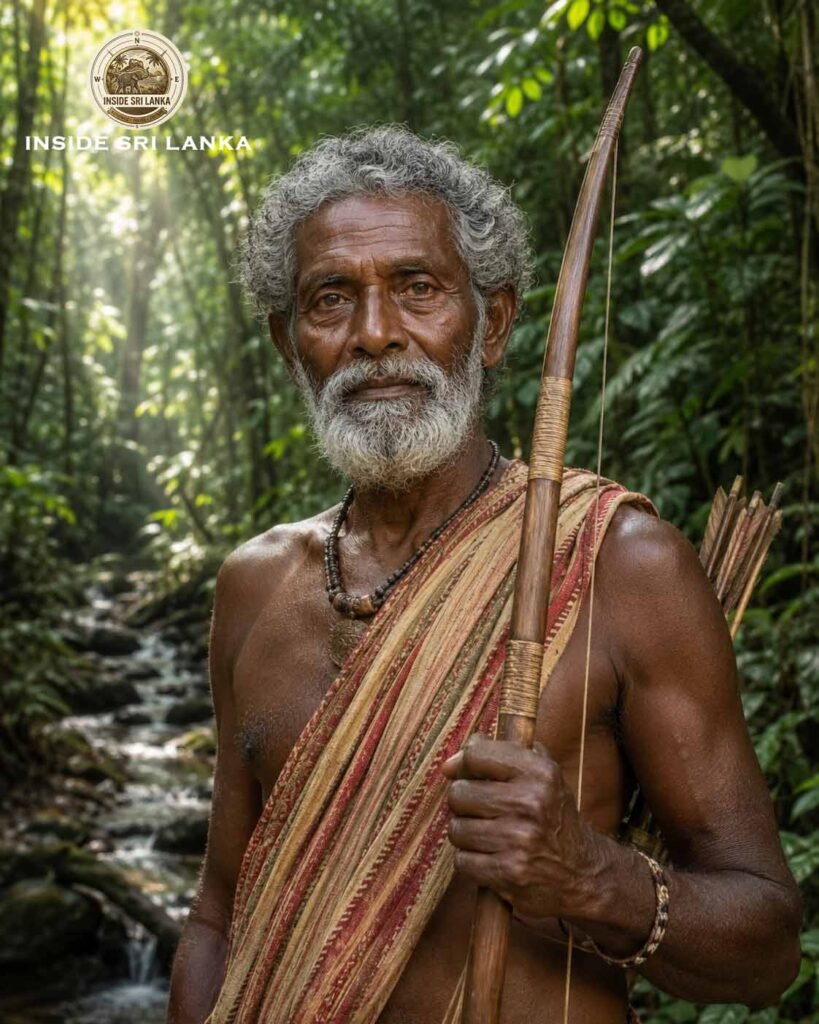
As thousands of years rolled by, the ice ages ended, the land bridge permanently submerged around 5,000 BC, and Sri Lanka became the isolated tropical island it is today. Later, around 1,000 BC to 500 BC, massive migrations of Iron Age communities from the Indian mainland began mixing with the local populations.
But did the original Balangoda Man completely disappear? Absolutely not.
Extensive research has proven a direct, unbroken biological continuum from the prehistoric Balangoda Man to our modern-day indigenous Vedda (Vaddha) community. The Vedda people share identical anatomical traits, teeth structures, and historical hunter-gatherer cave practices with their 38,000-year-old ancestors. Over the centuries, these indigenous groups integrated with the expanding populations across the island, meaning that a piece of Balangoda Man’s ancient DNA still quietly runs through the veins of modern Sri Lankans today.
Conclusion: A History Rooted in Truth
Sri Lanka doesn’t need exaggerated myths to sound grand. The undeniable scientific truth is far more awe-inspiring. Our island boasts the earliest recorded modern human remains in South Asia. Our ancestors invented high-precision hunting tools millennia before Europe. They conquered the rainforests, traded across mountain ranges, and built an identity that survived the test of thousands of generations.
The next time you look at the mist-covered mountains of Balangoda, the deep caves of Sabaragamuwa, or the red sands of the south, remember: you are standing on the cradle of South Asian civilization. That is the ultimate, unshakeable ancient secret of the land we call home.