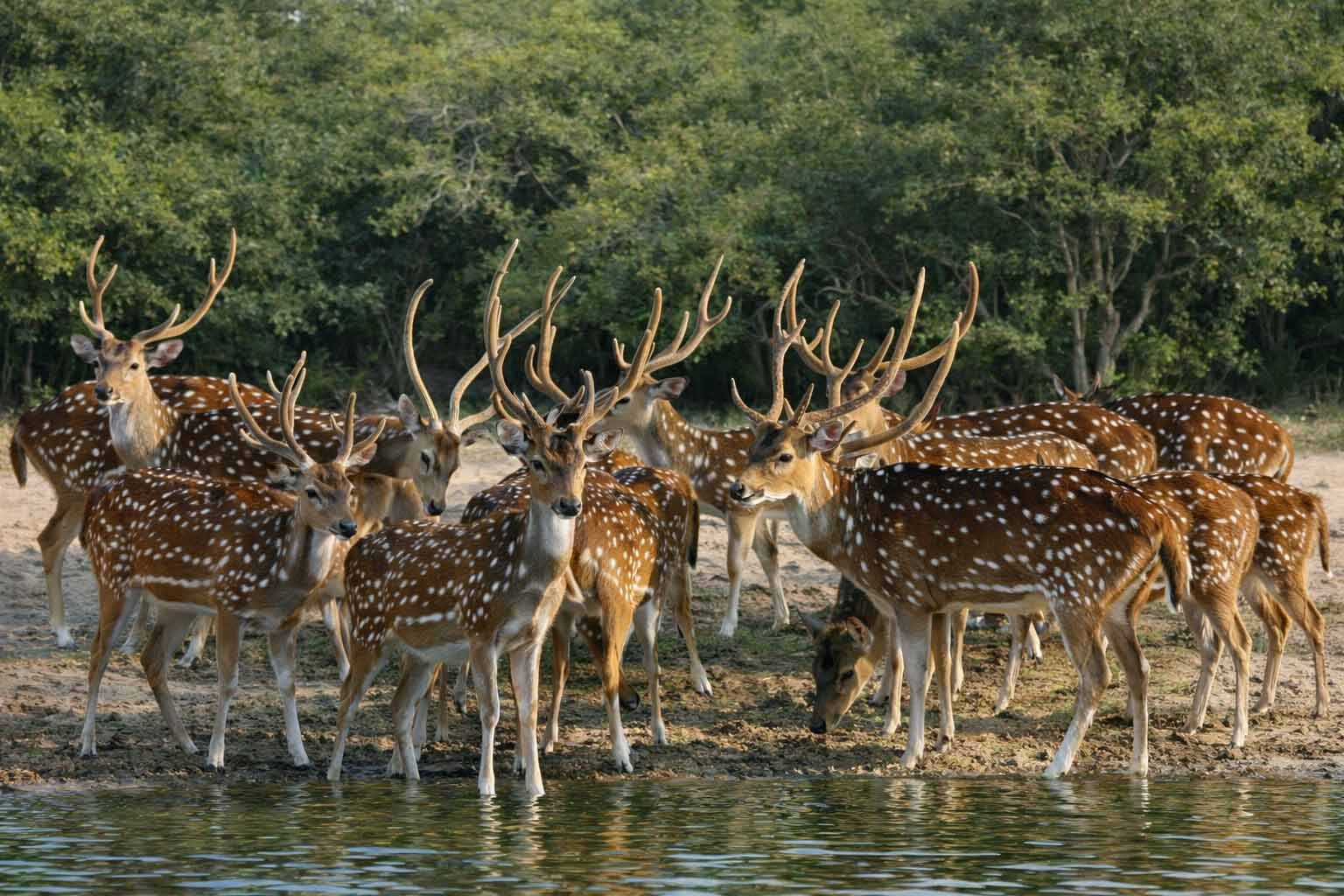
If you have ever taken a safari through the sun-drenched plains of Yala, Wilpattu, or Minneriya National Parks, you have undoubtedly encountered them. Moving gracefully in large herds through the golden grasslands, their reddish-brown coats decorated with bright white spots look like a living painting. This is the Sri Lankan Spotted Deer (Axis axis ceylonensis), known locally as the Thith Muwa.
While they are highly photographed and loved by travelers, very few people truly understand the complex biology, social structures, and fascinating life cycle of these gentle creatures. They are not just beautiful icons of the dry zone; they are a vital foundation of Sri Lanka’s entire jungle ecosystem.
In this comprehensive guide, we will dive deep into the 100% true biological facts of the Sri Lankan spotted deer—exploring their feeding habits, intricate mating rituals, pregnancy timelines, and how a tiny fawn survives the harsh realities of the wild.
1. Physical Characteristics: Built for the Tropical Dry Zone
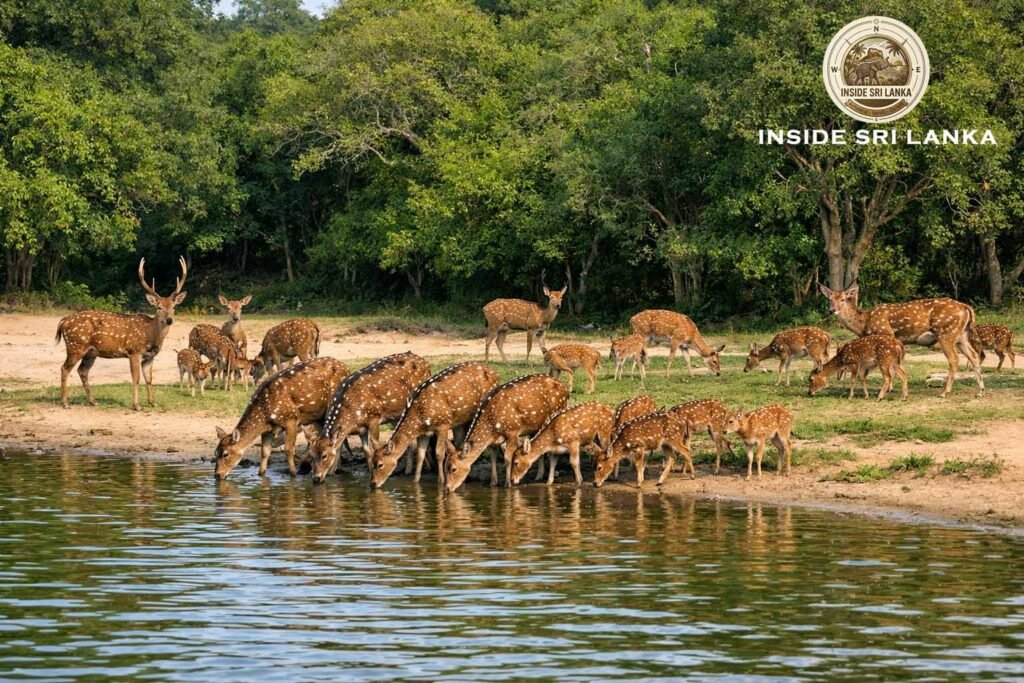
The Sri Lankan spotted deer is a distinct subspecies of the mainland Asian Chital. Over thousands of years of isolation on the island, they have adapted perfectly to Sri Lanka’s dry-zone environment.
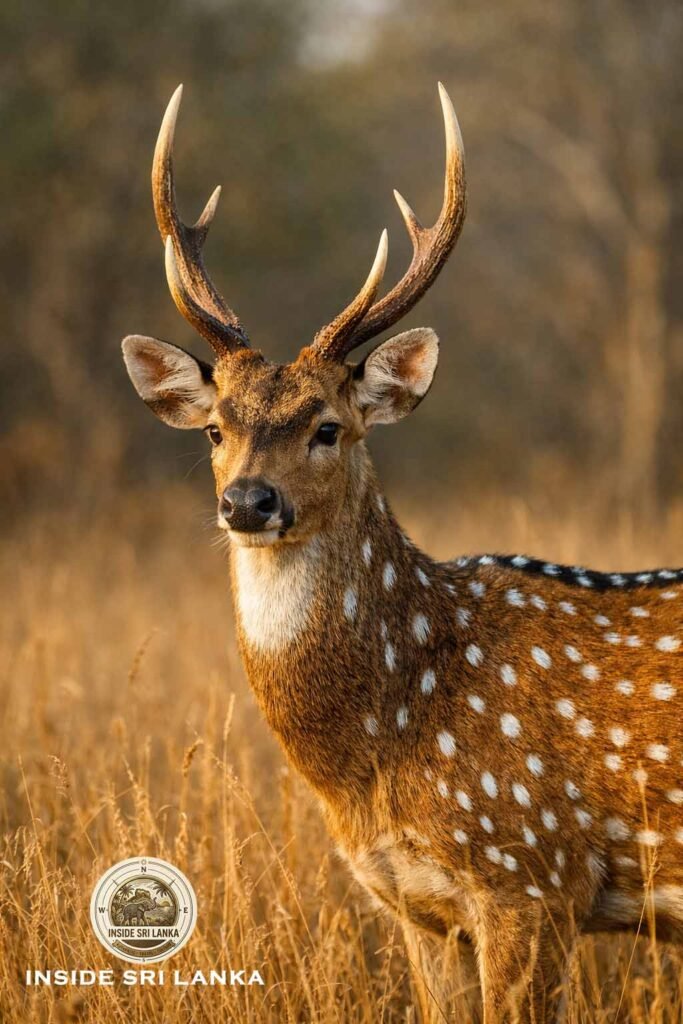
- The Coat: Their body features a gorgeous golden-fawn or reddish-brown coat covered in permanent white spots that never fade with age. This isn’t just for looks; it is a masterclass in camouflage. When a deer stands under a tree, the spots perfectly mimic the dappled sunlight filtering through the leaves, making them completely invisible to predators like leopards.
- Size and Weight: An adult male (stag) is significantly larger and heavier than a female (doe). A fully grown stag can weigh anywhere between 70 to 90 kilograms and stand about 90 cm tall at the shoulder. Females are sleeker, usually weighing between 45 to 60 kilograms.
- The Antlers: Only the males grow antlers. These are not hollow horns but solid bone structures that branch into three distinct tines on each side. Every year, a male will naturally shed his old antlers and grow a brand-new, larger pair. When the new antlers are growing, they are covered in a soft, blood-rich skin called “velvet,” which the deer eventually rubs off against tree bark once the bone hardens.
2. Diet and Feeding Habits: What Do They Eat?
Spotted deer are strictly herbivores. Their digestive system is designed to process a wide variety of plant matter found in the dry-zone forests.
The Grazing and Browsing Balance
Unlike some deer species that only eat grass, the Sri Lankan spotted deer is both a grazer (eats grass) and a browser (eats leaves, twigs, and bark). They love short, fresh green grass that sprouts after the rains, but during the dry season when the grasslands turn brown, they switch to browsing low-hanging tree leaves and shrubs.
The Monkey Connection (A Jungle Partnership)
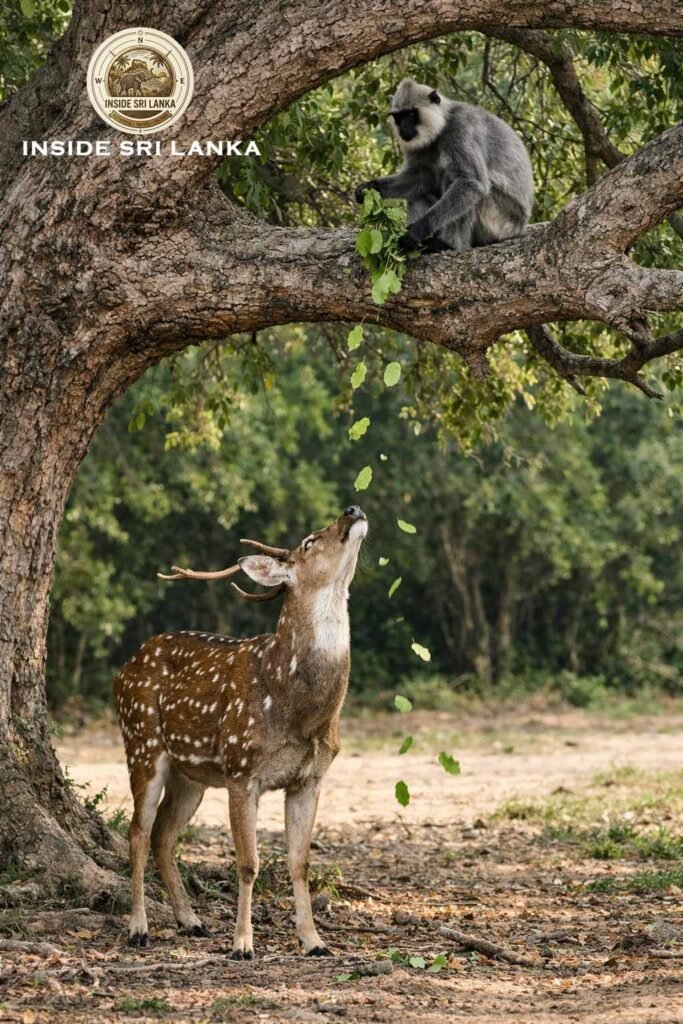
One of the most amazing, verified facts about their feeding habits is their mutual symbiotic relationship with the Tufted Gray Langur (the large grey monkey). In the dry zone, herds of deer will deliberately follow troops of langurs from tree to tree. As the monkeys clumsily feed high up in the canopy, they drop fresh leaves, fruits, and twigs onto the forest floor. The deer wait below to eat these high-nutrient treats that they could never reach on their own. In return, the monkeys benefit from the deer’s incredibly sharp sense of hearing and smell, which acts as an early warning system against leopards on the ground.
3. Social Structure and Communication
Spotted deer are highly social animals that live in organized groups called herds. A typical herd consists of 10 to 30 individuals, dominated by a few mature females and their young offspring. Adult males usually form separate, smaller “bachelor groups” or wander alone, only joining the female herds during the mating season.
To survive in a jungle filled with predators, they have developed a complex communication network:
- The Alarm Bark: If a deer senses a leopard, it emits a loud, sharp, metallic bark that sounds like a human coughing. The moment the herd hears this “alarm call,” the entire group freezes, looks in the direction of the danger, and prepares to sprint.
- The Tail Signal: When a spotted deer runs away from danger, it flashes its tail straight up, exposing the bright white underside. This acts as a visual “follow me” signal for the young fawns navigating through the thick, dark bush.
4. Reproduction and the Mating Season (The Rut)
Unlike deer in cold, European climates that only mate once a year during autumn, the Sri Lankan spotted deer can breed year-round. However, a major spike in mating activity occurs right before the monsoon rains, usually between May and August. This period is known as the “Rut.”
The Battle for Dominance
During the rut, male testosterone levels skyrocket. Stags use their hardened antlers to engage in fierce head-to-head battles with rival males. They lock antlers and push each other back and forth to prove who is stronger. The winner gains the exclusive right to mate with the female herd, while the loser retreats into the deep forest to heal his wounds.
5. The Pregnancy Timeline and the Birth of a Fawn
Once a successful mating occurs, the female enters her gestation period. The timeline of life creation inside the womb is a delicate and fascinating process.
The Gestation Period
The pregnancy of a Sri Lankan spotted deer lasts for approximately 210 to 225 days (roughly 7 to 7.5 months). During this time, the pregnant doe stays with the herd, but as the delivery date approaches, her behavior changes drastically.
The Act of Giving Birth
Spotted deer almost always give birth to a single fawn. Twins are incredibly rare in the wild. When it is time to give birth, the mother quietly leaves the safety of the herd and finds a highly secluded, dense patch of tall grass or thick thorny bushes. This isolation is crucial because the smell of amniotic fluid and blood can instantly attract leopards, jackals, and pythons.
6. The Early Days: How a Fawn Survives
When a fawn is born, it weighs only about 2.5 to 3.5 kilograms. Its legs are incredibly weak and wobbly, making it impossible to run away from danger. To protect her baby, the mother utilizes a survival strategy called “Hiding.”
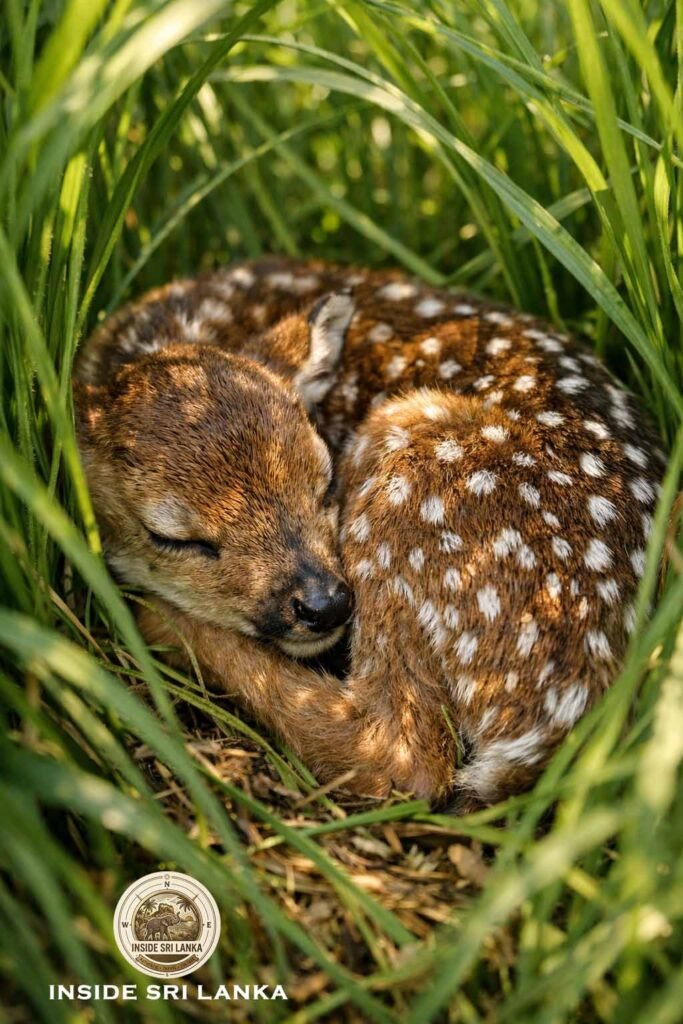
- The First Fortnight: For the first two to three weeks of its life, the fawn does not travel with the mother. It remains completely stationary, curled up in the thick grass. Its spotted coat blends flawlessly with the ground, and amazingly, newborn fawns have zero body odor, making it impossible for predators to track them by scent.
- The Nursing Routine: The mother leaves the fawn hidden while she goes out to graze with the herd. She returns quietly a few times a day to nurse the fawn with rich, high-fat milk and carefully licks the baby clean to remove any potential odors.
- Joining the Herd: After about three to four weeks, the fawn’s legs become strong and muscular. It is finally able to run at high speeds, at which point the mother proudly leads it back to join the main herd. The fawn will continue to nurse for about six months but will start nibbling on tender grass blades within its first month.
Conclusion: The Pulse of the Forest
The Sri Lankan spotted deer lives for about 10 to 15 years in the wild, though many fall victim to predators much earlier. They are the primary food source for the endangered Sri Lankan leopard, meaning that the survival of our big cats depends entirely on the health of our deer herds.
Watching a herd of spotted deer peacefully grazing against the backdrop of a Sri Lankan sunrise is a reminder of the delicate balance of life. They represent the gentle, quiet beauty of our jungles—a species defined by grace, intelligence, and a timeless spirit of survival.