When we look back at the roots of Sri Lankan history, one name echoes louder than any other through the corridors of time: King Vijaya. According to the Mahavamsa (the Great Chronicle of Sri Lanka), he is documented as the island’s very first formal king, ruling from 543 BC to 505 BC. But as modern truth-seekers and history buffs, we have to look deeper. Who was this man? Was he a noble pioneer, an exiled prince, or simply a ruthless adventurer who happened to change the destiny of Heladiva forever?
Let’s peel back the layers of myths, lions, and magic to find the absolute historical truth about the man who laid the foundation for the Sinhalese Kingdom.
The Dark Backstory: Exiled from India
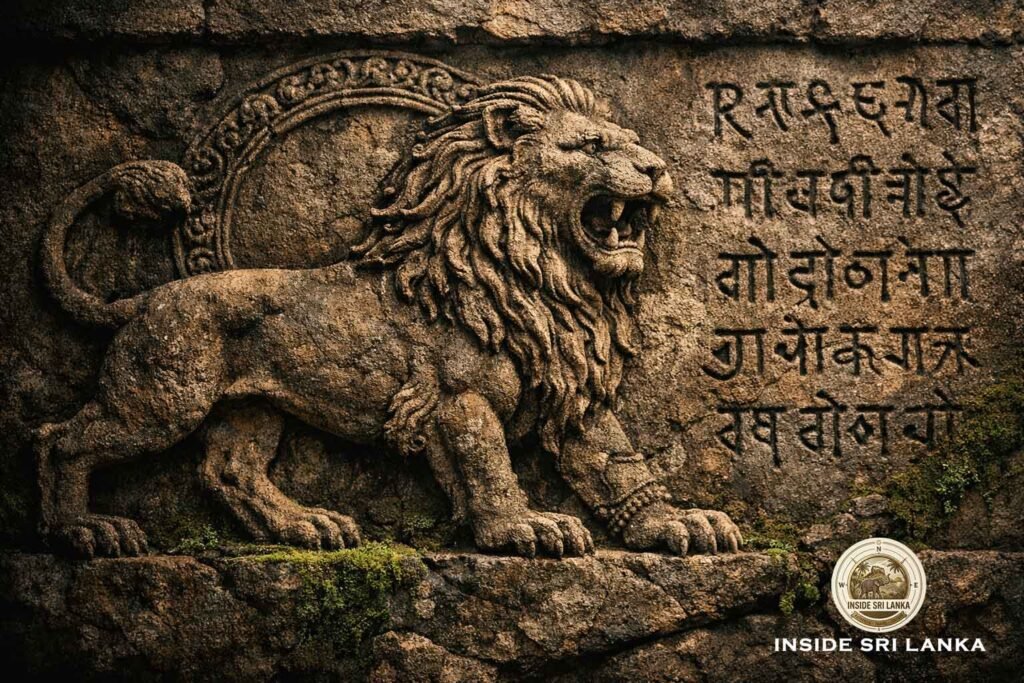
To understand King Vijaya, we have to look at where he came from. He wasn’t born in Sri Lanka. He was a prince from Lala (modern-day West Bengal or Gujarat in India). His father was King Sinhabahu, and according to legend, his grandfather was a literal lion. Now, biologically speaking, we know that a human-lion hybrid is impossible. This was most likely a metaphor; his grandfather was probably a fierce tribal leader or a bandit chief known as “The Lion.”
But Vijaya wasn’t a well-behaved prince. Ancient texts reveal that he and his band of 700 followers were notorious troublemakers. They committed so many violent acts and crimes against the citizens that the people practically revolted. To stop a civil war, King Sinhabahu did something drastic. He shaved half the heads of Vijaya and his 700 men—a sign of absolute disgrace—and put them on a ship, banishing them forever.
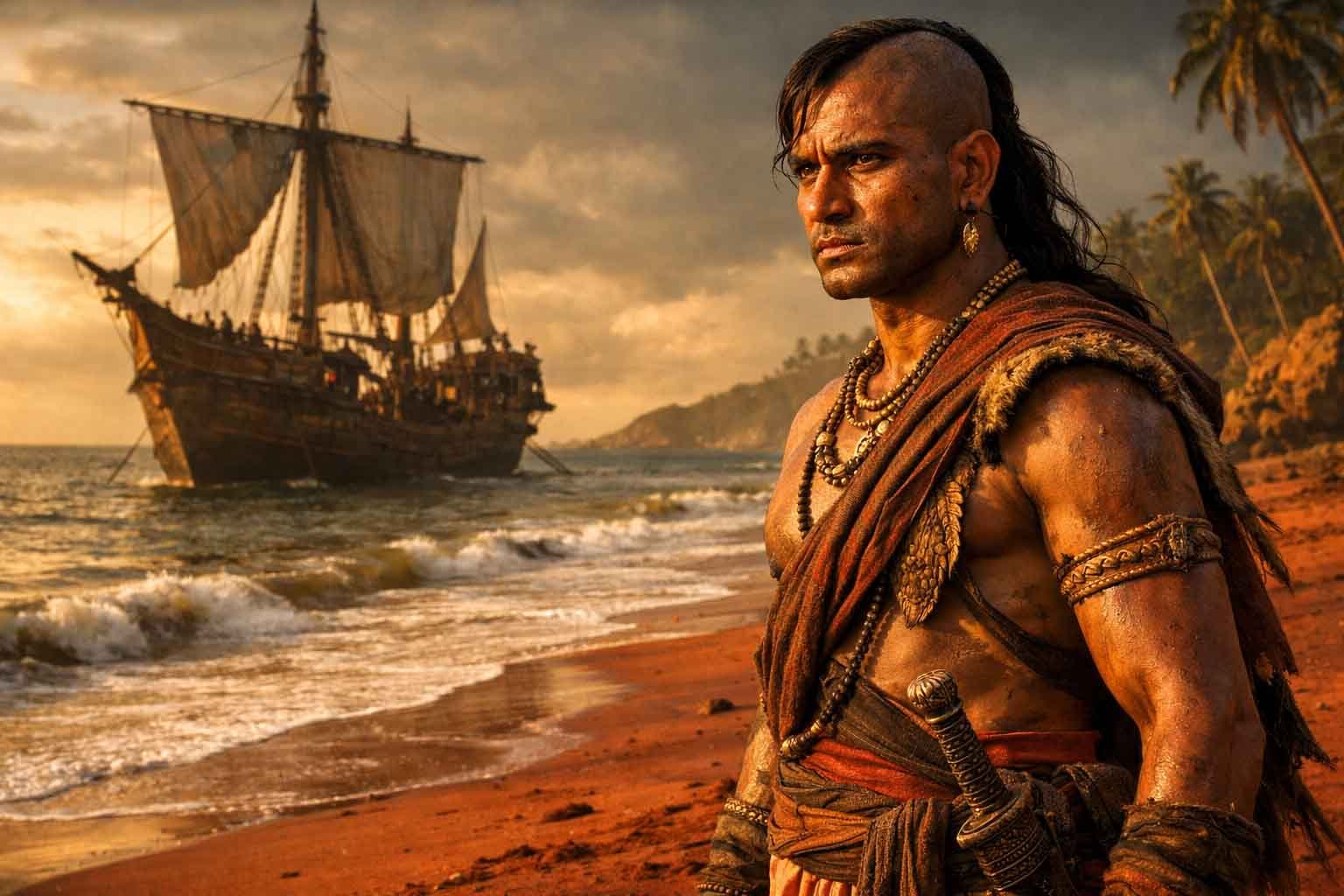
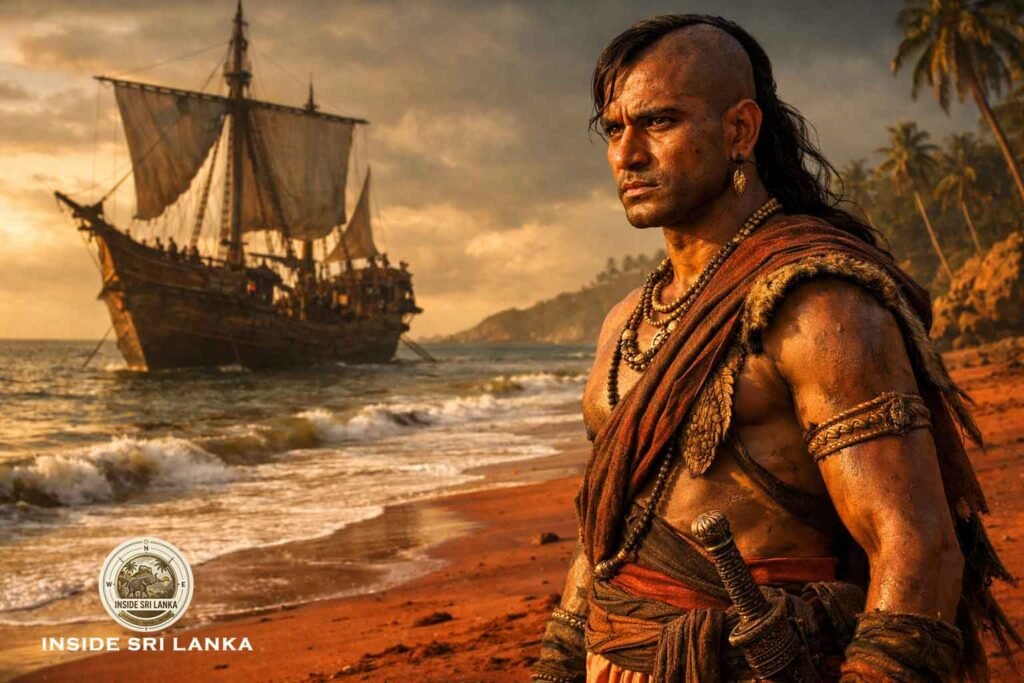
Imagine the scene: 700 hardened, disgraced men floating on the Indian Ocean, searching for a shore to conquer. That is how Sri Lanka’s recorded royal history actually begins. Not with a holy mission, but with a boat full of outcasts.
Suppatara to Tambapanni: The Fateful Landing
The ship eventually made its way south. After a brief stop at a port called Suppatara, they finally stepped onto the shores of Sri Lanka on a very specific day—the exact day that Gautama Buddha passed away (attained Parinirvana) in India.
When Vijaya and his men collapsed onto the beaches, they noticed something strange. Their hands and knees turned a deep, copper-red color. The soil was rich with iron oxide. Because of this, Vijaya named the island “Tambapanni” (which means copper-colored palms). Today, historians agree that this landing spot was near modern-day Mannar or Kudiramalai (near Wilpattu). If you visit Kudiramalai even today, you can still see the red cliffs facing the ocean—a tangible piece of evidence that connects us directly to that fateful morning over 2,500 years ago.
The Secret Meeting: Kuveni and the Indigenous Tribes
Before Vijaya’s boots touched the red soil, Sri Lanka wasn’t an empty jungle. It was inhabited by highly organized indigenous tribes: the Yakkhis, Nagas, and Devas.
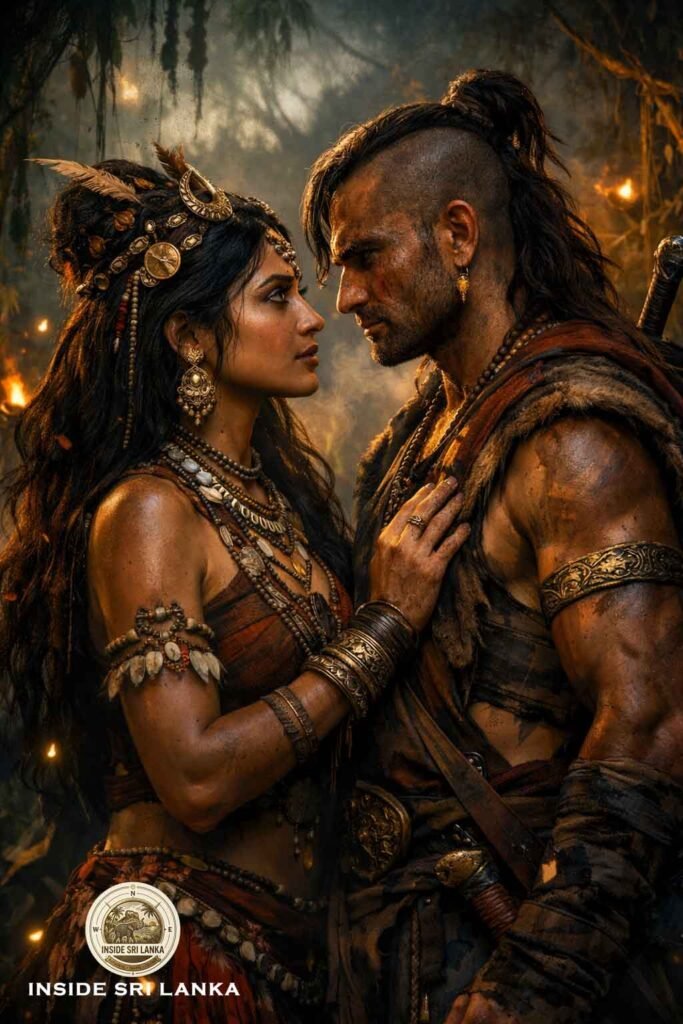
The Mahavamsa introduces a mythical twist here, claiming Vijaya met a witchcraft-practicing queen named Kuveni, who captured his men and tried to enchant him. But if we strip away the magic, the political reality becomes clear. Kuveni was a powerful princess of the local Yaksha clan. She saw an opportunity. Instead of fighting these 700 foreign warriors, she decided to use them to overthrow her own people and secure ultimate power.
Vijaya, being a cunning political strategist, accepted her alliance. He married Kuveni. With her insider knowledge of the local geography and tribal secrets, Vijaya and his men launched a surprise night attack on the grand Yaksha city of Sirisavatthu during a royal wedding celebration. The local leadership was wiped out. Through betrayal and blood, Vijaya established his dominance over the island.
Becoming the First King: The Establishment of Sinhala
Once the local opposition was crushed, Vijaya didn’t just stay a tribal chief. He built a kingdom. He established his capital, called Tambapanni Nuwara, and his 700 followers spread across the country, founding early settlements like Anuradhagama (near Anuradhapura) and Upatissagama.
But to be recognized as a legitimate “King” according to ancient Aryan traditions, Vijaya needed a queen of equal royal blood. Kuveni, despite everything she had sacrificed for him, was considered a “native tribal woman” and not fit for an Aryan crown.
This is where the story takes a tragic turn. Vijaya abandoned Kuveni and their two children. He sent a message to the Pandu King of Madurai in South India, requesting a royal princess for himself and noble women for his 700 men. The princess arrived with grand gifts and artisans, marking the beginning of the formal Sinhalese Monarchy. Kuveni, heartbroken and cast out, returned to her tribal people, where she was brutally killed for her past betrayal. Her children fled into the forests of Samanalakanda (Adam’s Peak), and tradition holds that they became the ancestors of Sri Lanka’s indigenous Veddah people.
With his new Indian queen, Vijaya was formally consecrated as the first official King of Sri Lanka. He took the clan name Sinhala (derived from his lion-descended lineage), giving birth to the name of the Sinhalese race.
The Mystery of the Missing Heir
King Vijaya ruled Tambapanni for 38 long years. He brought order out of chaos, introduced structured agriculture, and established trade routes with India. But despite all his power and his new royal marriage, fate dealt him a silent blow. He and his new queen could never conceive a child.
As the old king lay on his deathbed, he realized that his entire kingdom faced total collapse without an heir. Desperate to keep the crown within his family, he sent a swift message back to his homeland of Lala, begging his twin brother, Sumitta, to come and take the throne.
But ancient communication was slow, and ocean voyages were treacherous. Before an answer could reach the island, King Vijaya passed away in 505 BC.
For one whole year, Sri Lanka had no king. It was governed by his chief minister, Upatissa, who held the country together until Vijaya’s nephew, Prince Panduvasdeva (Sumitta’s son), finally arrived from India to claim the crown.
Historical Fact vs. Myth: What is 100% Real?
As modern readers, we must look at the archaeological evidence to separate fact from folklore.
| Myth in Chronicles | The Actual Historical Reality |
| Vijaya’s grandfather was a literal lion. | The father belonged to a royal clan that used the Lion as their totem/emblem. |
| Kuveni used black magic to trap the men. | The indigenous tribes used advanced guerrilla warfare and camouflage in the dense jungles. |
| The island was instantly named “Sinhala.” | The island went through names like Tambapanni and Taprobane before Sinhala became prominent. |
Archaeological excavations in Anuradhapura and Mannar have pulled up pottery pieces, iron tools, and early Brahmi inscriptions dating back to this exact era. These discoveries prove that during the 5th and 6th centuries BC, there was indeed a massive influx of North Indian culture, language, and technology to Sri Lanka. Vijaya might be a heavily romanticized figure, but the ruler he represents was absolutely real.
Final Thoughts: The Legacy of a Conqueror
King Vijaya is a complex character to judge. He wasn’t a saint. He was an exiled rebel who betrayed the local queen who loved him, all for the sake of political legitimacy. Yet, without his iron will, his tactical mind, and his sheer survival instincts, the unique civilization of Sri Lanka might never have been born.
He took a wild, mysterious island inhabited by hidden jungle tribes and turned it into a structured nation that would eventually build some of the greatest wonders of the ancient world. That is the dark, fascinating, and unvarnished truth of how Sri Lanka’s royal bloodline began.