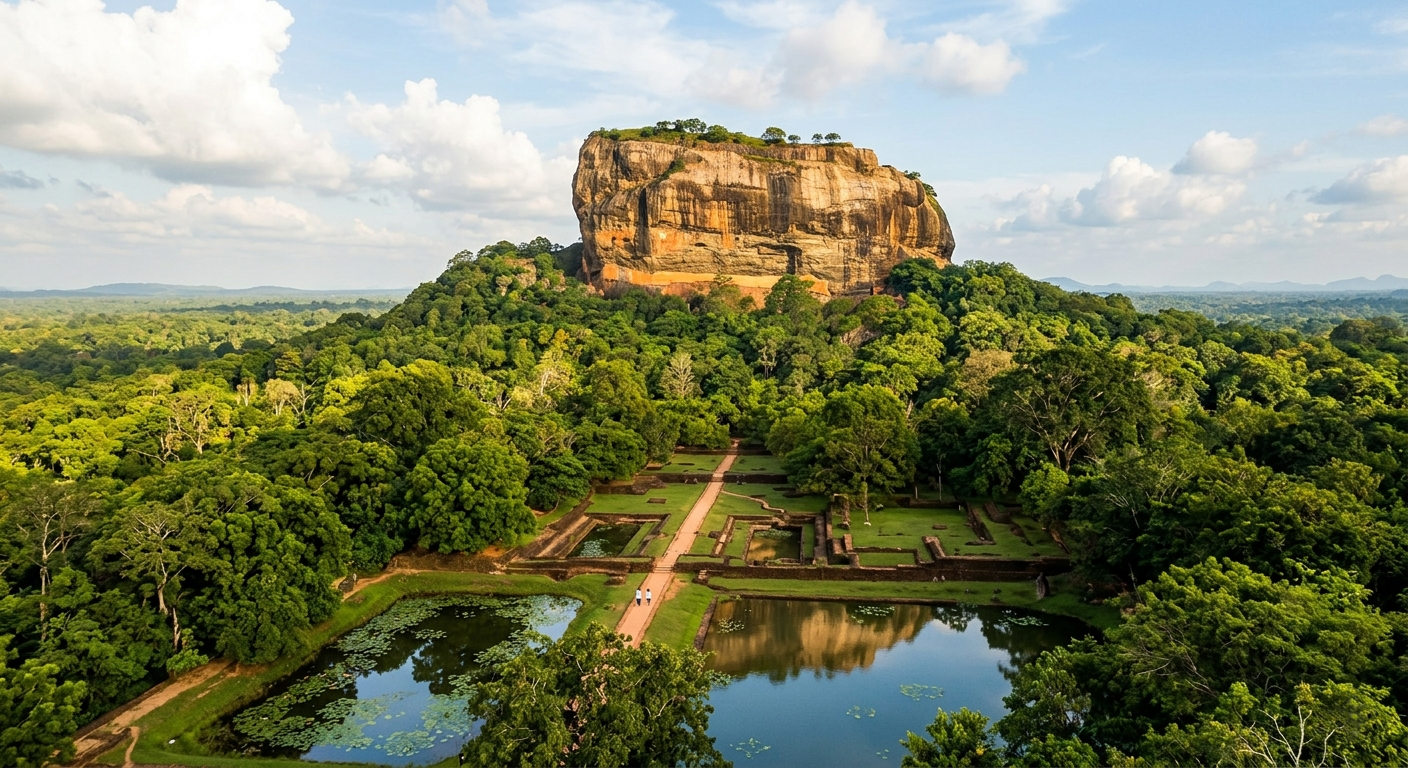
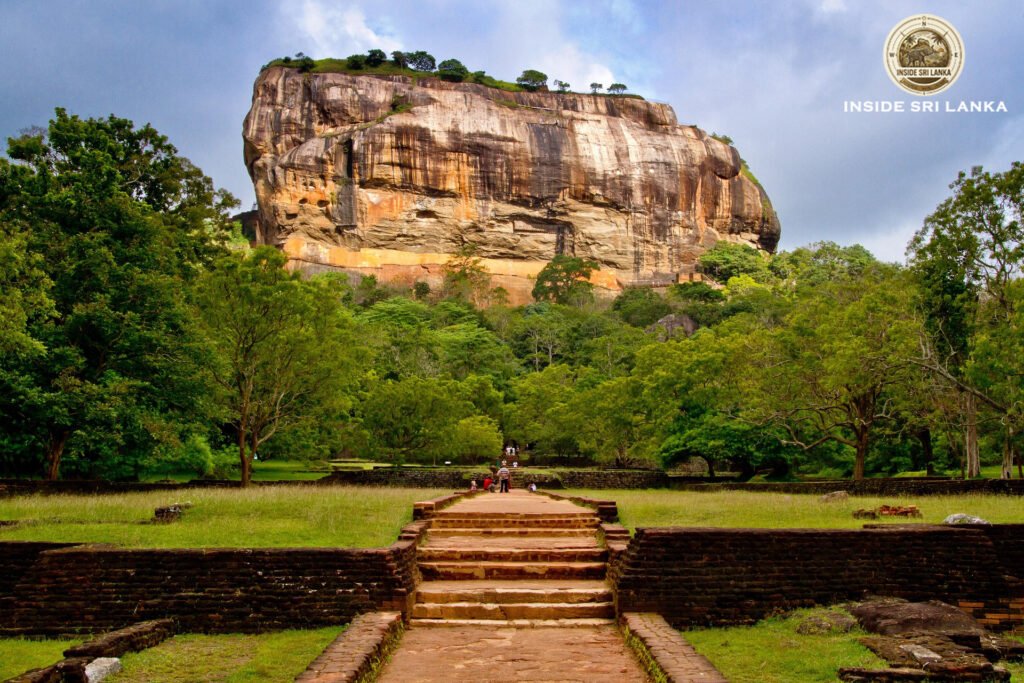
Sri Lanka, the pearl of the Indian Ocean, is an island steeped in a history that stretches back over 2,500 years. Among its many wonders, nothing captures the imagination quite like the majestic Sigiriya. Known globally as the “Lion Rock,” this UNESCO World Heritage site is far more than a simple tourist stop. It is a brilliant masterpiece of ancient urban planning, a marvel of hydraulic engineering, and a tragic stage for a royal drama that changed the course of Sri Lankan history.
If you are planning a journey to the cultural triangle, or if you are a history enthusiast looking for the mysteries of the past, this guide will uncover the ancient secrets that make Sigiriya a true eighth wonder of the world.
1. The Royal Drama: A King’s Ambition and Fear
To understand Sigiriya, you must understand King Kashyapa (477 – 495 AD). The story begins with a family feud. Kashyapa, the son of King Dhatusena, seized the throne from his father and drove his brother, the rightful heir Moggallana, into exile in India.
Fearing his brother’s eventual return with an army, Kashyapa abandoned the traditional capital of Anuradhapura and moved to the massive 200-meter-high rock of Sigiriya. He transformed this inhospitable rock into a luxury palace and a military fortress. The secret of Sigiriya lies in its dual purpose: it was a symbol of absolute power and a desperate shield against a brother’s revenge.
2. The Engineering Marvel: World’s Oldest Landscaped Gardens
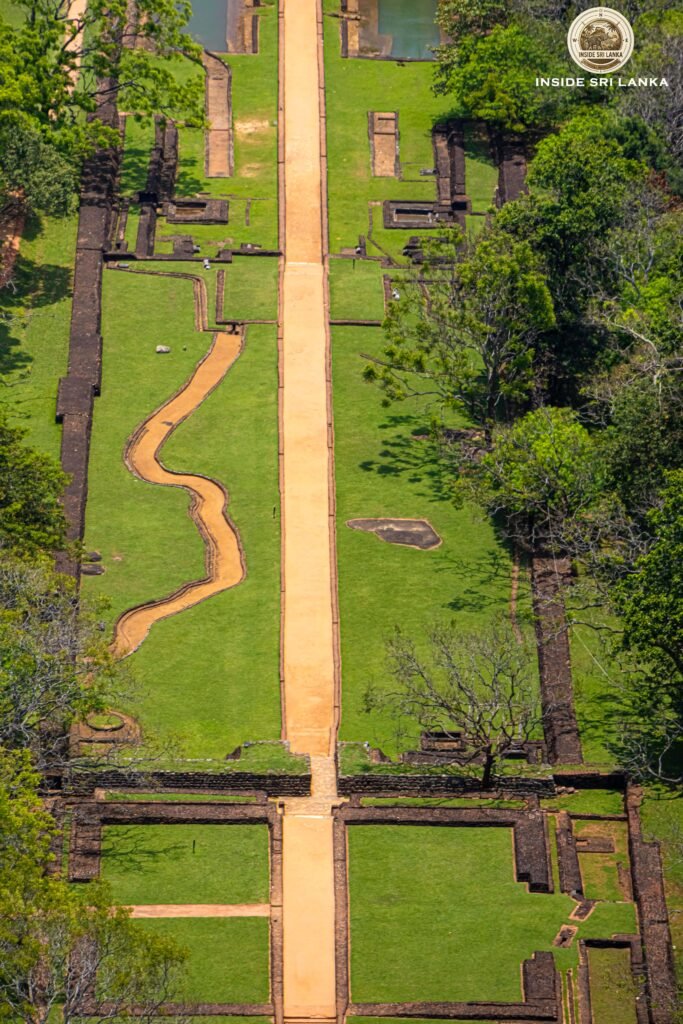
One of the most mind-blowing secrets of Sigiriya is its landscaping. Long before modern European gardens were designed, the architects of Sigiriya created a symmetrical layout of water gardens, boulder gardens, and terrace gardens.
The Water Gardens are particularly famous. They consist of a series of pools, fountains, and winding streams. The secret that baffles modern scientists is the Hydraulic System. Using gravity and pressure, ancient engineers laid underground clay pipes that still function today. During the monsoon season, you can see the fountains at the base of the rock spraying water just as they did 1,500 years ago. This level of precision in water management is rarely seen in the ancient world.
3. The Mirror Wall: Ancient Social Media and Graffiti
As you climb toward the summit, you will walk along a high brick wall protected by a plaster coating so fine that it was once reflective. This is the Mirror Wall. While the King used it to see his reflection, it later became a “guestbook” for travelers.
From the 6th to the 14th century, visitors from all over the island (and the world) wrote their thoughts on this wall. These “Sigiri Graffiti” are thousands of poems and messages written in ancient Sinhala, Sanskrit, and Tamil. They describe the beauty of the palace and the ladies in the frescoes. In a way, the Mirror Wall was the world’s first version of Social Media, where people shared “reviews” of their travel experiences over a thousand years ago.
4. The Mystery of the Frescoes: Who are the Sigiriya Ladies?
Halfway up the rock, tucked away in a sheltered gallery, are the world-famous Sigiriya Frescoes. These vibrant paintings of beautiful women have survived the harsh tropical sun, wind, and rain for over a millennium.
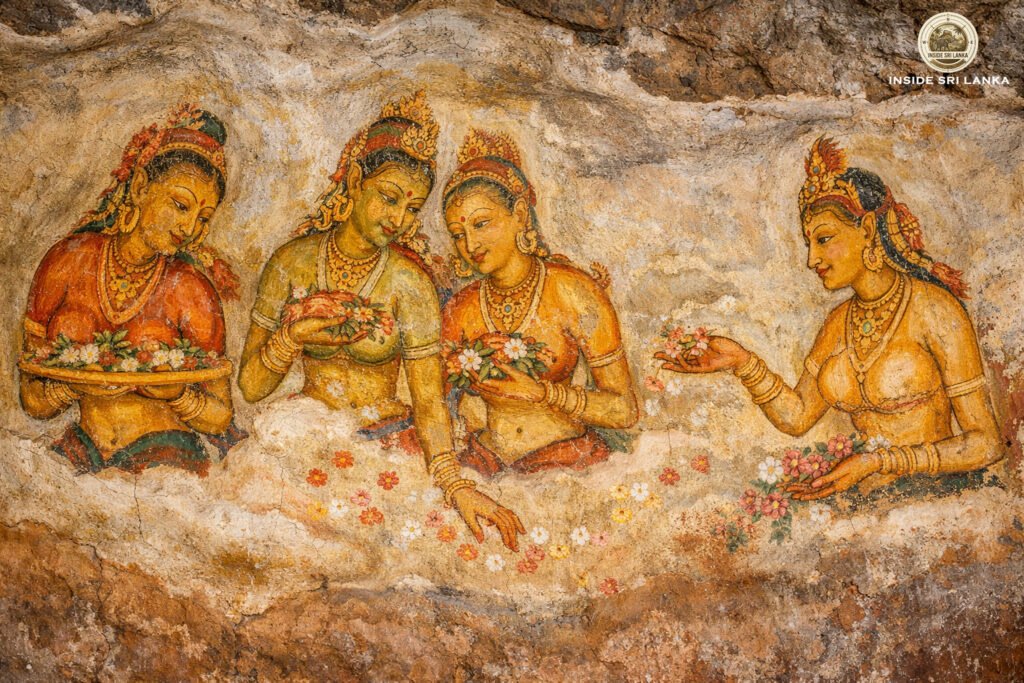
The secret of their longevity lies in the technique. The artists used a unique plaster base mixed with local minerals and natural pigments. There are many theories about who these women are—some say they are the King’s concubines, while others believe they represent celestial nymphs (Apsaras) scattering flowers over the earth. Originally, these paintings covered a massive area of the rock face, making it one of the largest outdoor art galleries in human history.
5. The Summit Palace: A Throne in the Clouds
Reaching the summit is a challenge, but the reward is unparalleled. The top of the rock covers about 1.6 hectares and was once home to a complex of royal buildings, ponds, and a magnificent throne.
The Royal Throne, carved directly out of the living rock, faces the sunrise. Sitting here, the King could look over his entire kingdom. The secret of how the ancient builders transported tons of bricks, food, and water to this height without modern machinery remains one of the most debated topics among historians.
6. The Lion’s Entrance: A Symbol of Majesty
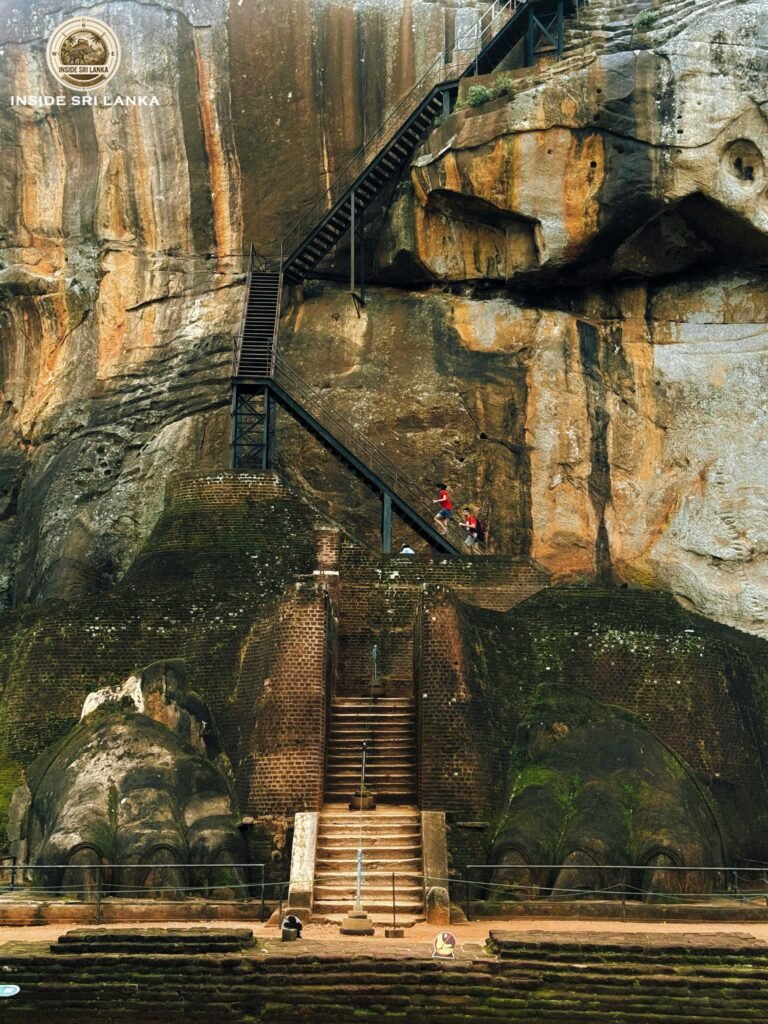
The name “Sigiriya” comes from the word Sinha-giri, meaning Lion Rock. When you reach the northern plateau, you are greeted by two massive lion paws carved into the rock.
Archaeologists believe that there was once a gigantic brick lion sitting against the rock, and the stairs led directly through the lion’s open mouth. This was designed to intimidate visitors and remind them that they were entering the domain of a powerful “Lion King.” Today, only the paws remain, but they are enough to give you a sense of the grand scale of Kashyapa’s vision.
7. The Cobra Hood Cave and the Boulder Gardens
At the base of the rock, the Boulder Gardens offer a different kind of mystery. These massive rocks were not just left there; they were incorporated into the defense system. Many of them were “pre-cut” so they could be pushed down onto invaders from above.
The Cobra Hood Cave is a must-see, named for its natural rock formation that looks like a cobra with its hood spread. It contains ancient paintings and inscriptions, proving that Sigiriya was a site for Buddhist monks long before King Kashyapa turned it into a palace.
Essential Travel Tips for Your Sigiriya Adventure
To make the most of your visit to this ancient wonder, keep these tips in mind:
- Arrival Time: The gates open at 7:00 AM. We highly recommend arriving then to beat the heat and the large crowds that arrive by 10:00 AM. Alternatively, the late afternoon (around 3:30 PM) offers beautiful “golden hour” lighting for photos.
- Physical Preparation: There are roughly 1,200 steps to the top. It is a moderate climb, but the heat can make it feel harder. Wear comfortable trekking shoes and bring plenty of water.
- Respect the Rules: Photography is strictly prohibited in the Frescoes gallery to protect the ancient pigments from camera flashes. Please respect the signs.
- Stay in the Heart of the Action: While many people stay in Kandy, the best way to experience the area is to stay in Habarana.
Local Insight: Habarana is the perfect central hub for the Cultural Triangle. Not only is it close to Sigiriya, but it is also the gateway to Minneriya and Kaudulla National Parks. After a morning of climbing ancient ruins, there is no better way to relax than by watching a herd of wild elephants in the afternoon. If you want a truly authentic experience, look for a local guide in Habarana who can show you the “unbeaten paths” around the rock.