If you are planning a trip to Sri Lanka in 2026, there is one place that stands as a silent witness to a glorious past: the ancient city of Polonnaruwa. Often overshadowed by the more famous Sigiriya, Polonnaruwa offers a completely different experience—a vast, sprawling “garden city” filled with ruins that feel so alive you can almost hear the echoes of the kings who once walked these streets.
As the second capital of Sri Lanka after the fall of Anuradhapura in the 10th century, Polonnaruwa became a hub of culture, spirituality, and incredible engineering. Today, it is a UNESCO World Heritage Site and a must-visit destination in the Cultural Triangle. In this guide, I’ll take you through the heart of this ancient kingdom and share everything you need to know for an unforgettable visit.
A Glimpse into History: The Kingdom of Three Great Kings
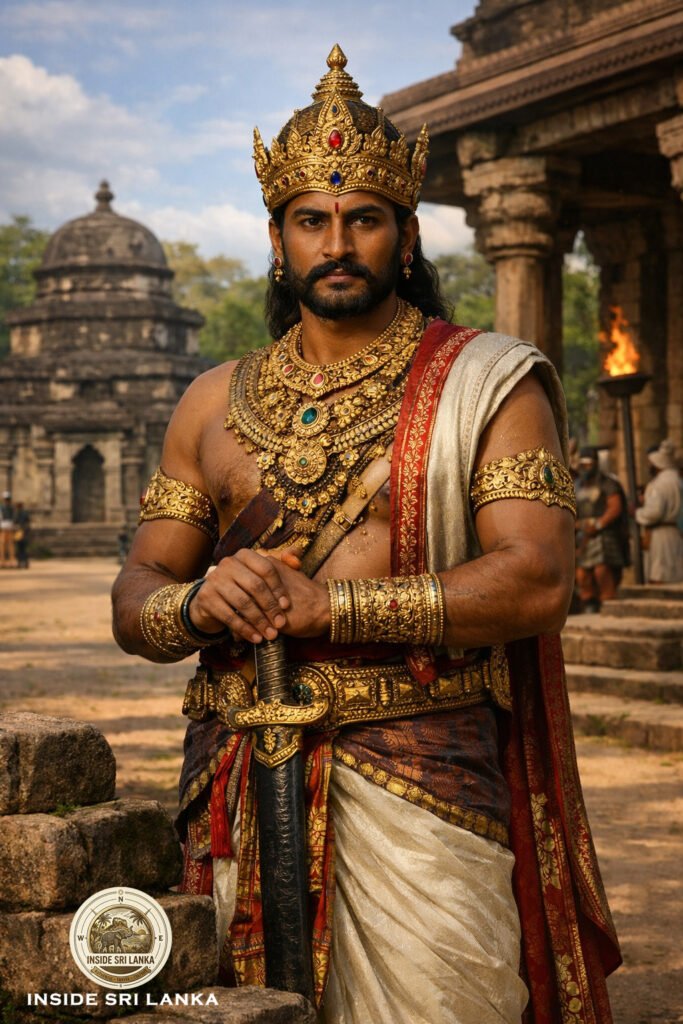
The story of Polonnaruwa is essentially the story of three visionary monarchs who transformed this dry-zone outpost into a world-class city.
First, there was King Vijayabahu I, who liberated the island from invaders and established Polonnaruwa as the capital. Then came King Parakramabahu the Great, the man responsible for the city’s most iconic structures and its massive hydraulic systems. Finally, King Nissanka Malla added his own artistic touch, leaving behind some of the most beautiful stone inscriptions and carvings in the country.
Under their rule, the city became a melting pot where Buddhist and Hindu influences blended seamlessly, which you can still see today in the architecture of the temples.
The Architecture: Engineering That Defied Time
What makes Polonnaruwa special is how well-preserved it is. When you walk through the ruins, you aren’t just looking at foundations; you are looking at towering brick walls, intricate drainage systems, and massive rock-cut statues.
One of the “Ancient Secrets” of this city is its Hydraulic Civilization. The center of this system is the Parakrama Samudra (The Sea of Parakrama). This man-made reservoir is so vast that it creates its own micro-climate, cooling the entire city. It was the lifeblood of the kingdom, providing water for year-round agriculture in a region that sees very little rain.
The Main Clusters: What to See in Polonnaruwa
The ancient city is organized into groups, which makes it very easy to navigate, even on a bicycle. Here are the highlights you simply cannot miss:
1. The Quadrangle (Dalada Maluva)
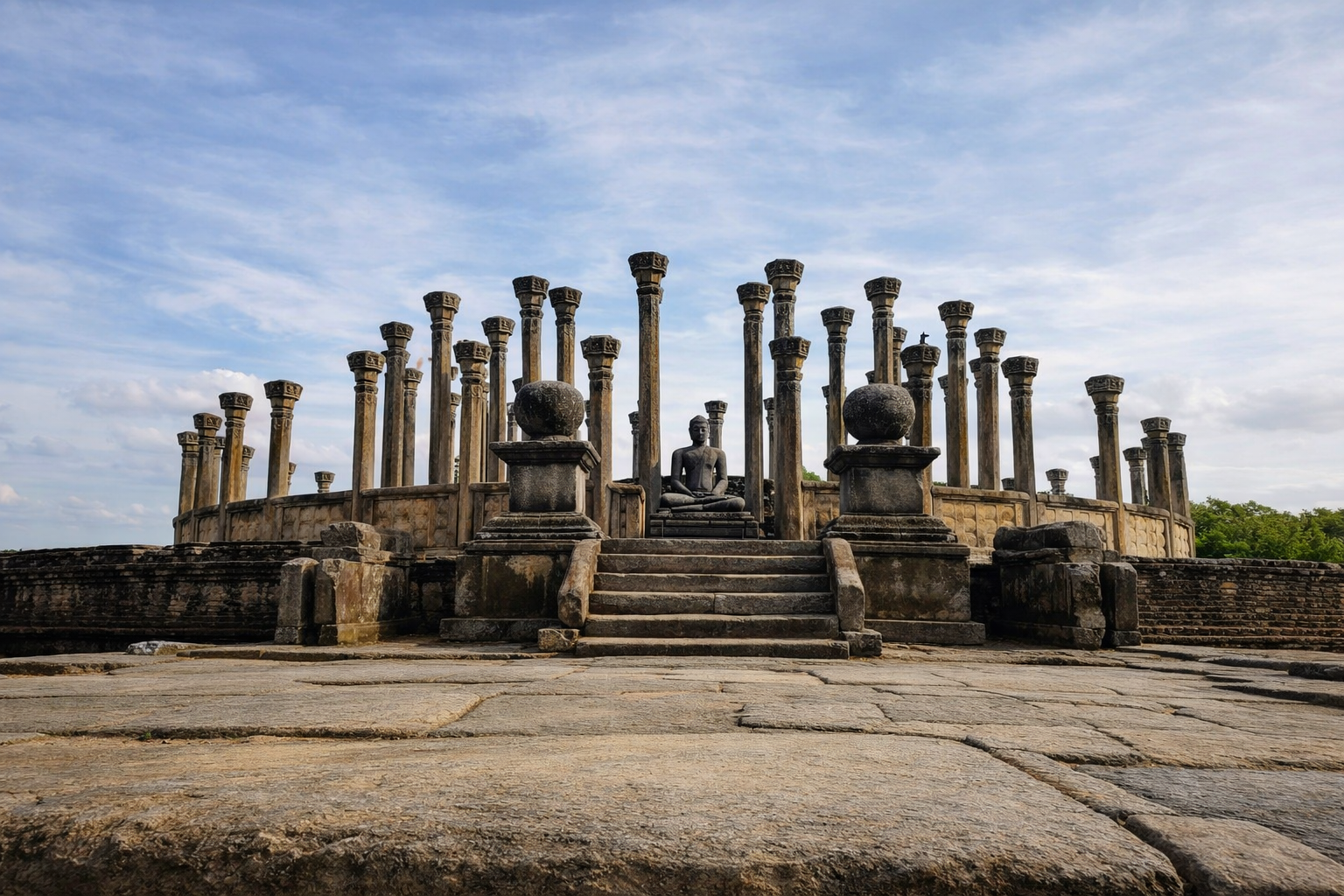
This is the most sacred and architecturally rich part of the city. At its center stands the Vatadage (Circular Relic House), a masterpiece of stone carving that once housed the Sacred Tooth Relic of the Buddha. Surrounding it are other wonders like the Hatadage and the Thuparama Image House, the latter still retaining its original vaulted roof.
2. The Royal Palace Group
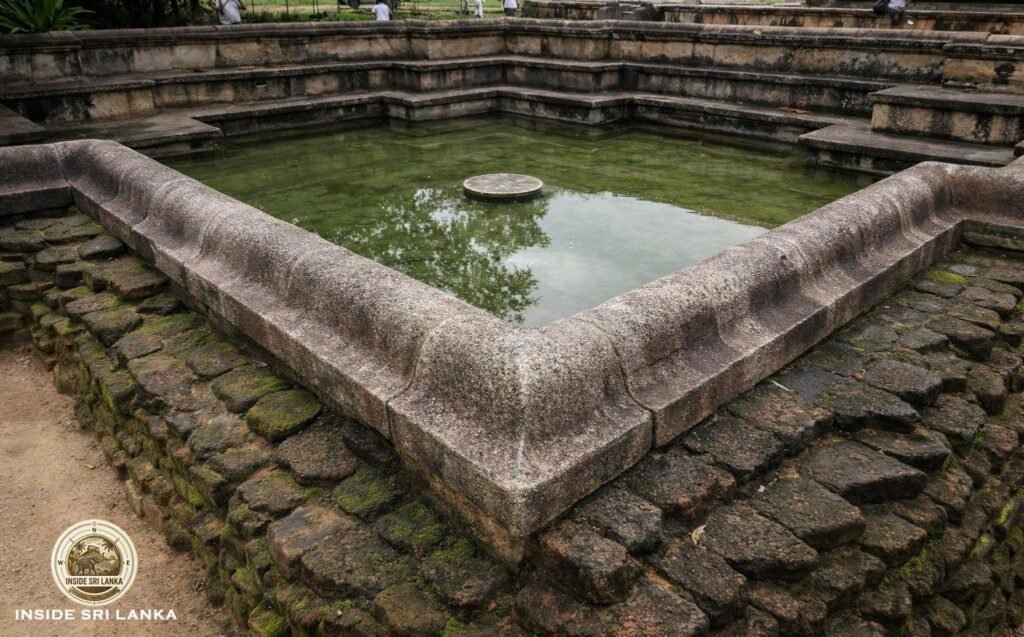
Here you can see the ruins of the Royal Palace of King Parakramabahu. Historical records say it was once seven stories high with a thousand rooms! Today, the massive brick walls give you a sense of its former grandeur. Don’t miss the Royal Bathing Pool (Kumara Pokuna), which features stone-carved water spouts that still function during the rains.
3. Gal Vihara (The Rock Temple)
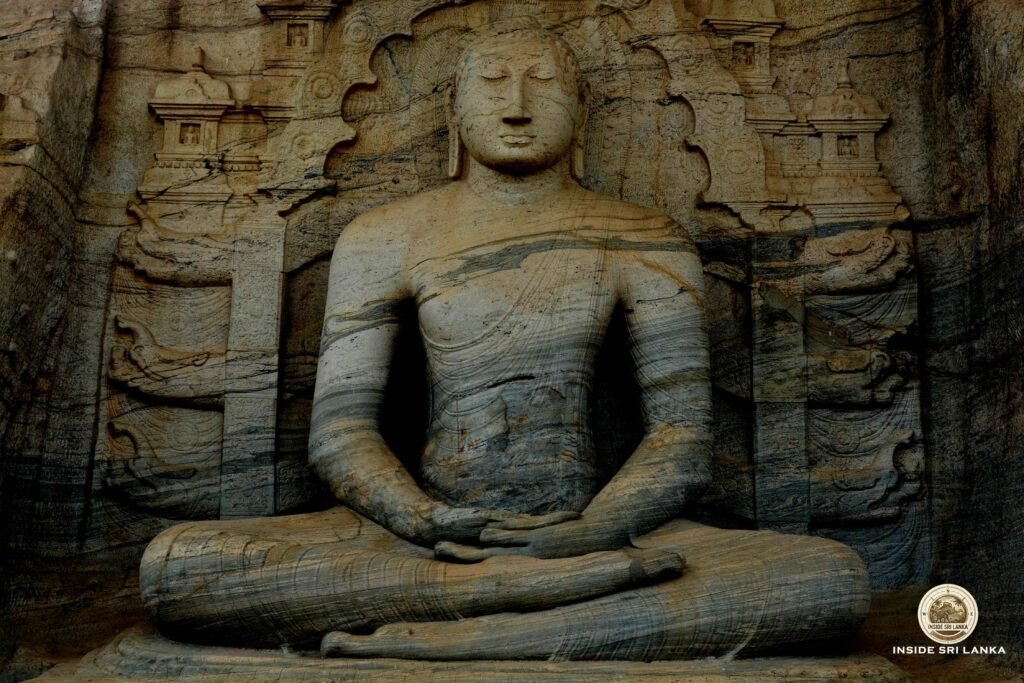
If you visit only one place in Polonnaruwa, make it Gal Vihara. It features four massive Buddha statues carved from a single granite rock. The Reclining Buddha, stretching 14 meters long, and the unique Standing Buddha with crossed arms are world-famous for their serene expressions and the detailed “grain” of the rock.
4. Lankatilaka Vihara and Rankot Vihara
Lankatilaka is a soaring brick structure with 17-meter high walls, while Rankot Vihara is the largest stupa in Polonnaruwa, built to resemble the Great Stupa of Anuradhapura.
Practical Tips for Visiting in 2026
To have a smooth experience, I’ve put together some practical advice based on local knowledge and the latest 2026 travel updates.
How to Get Around
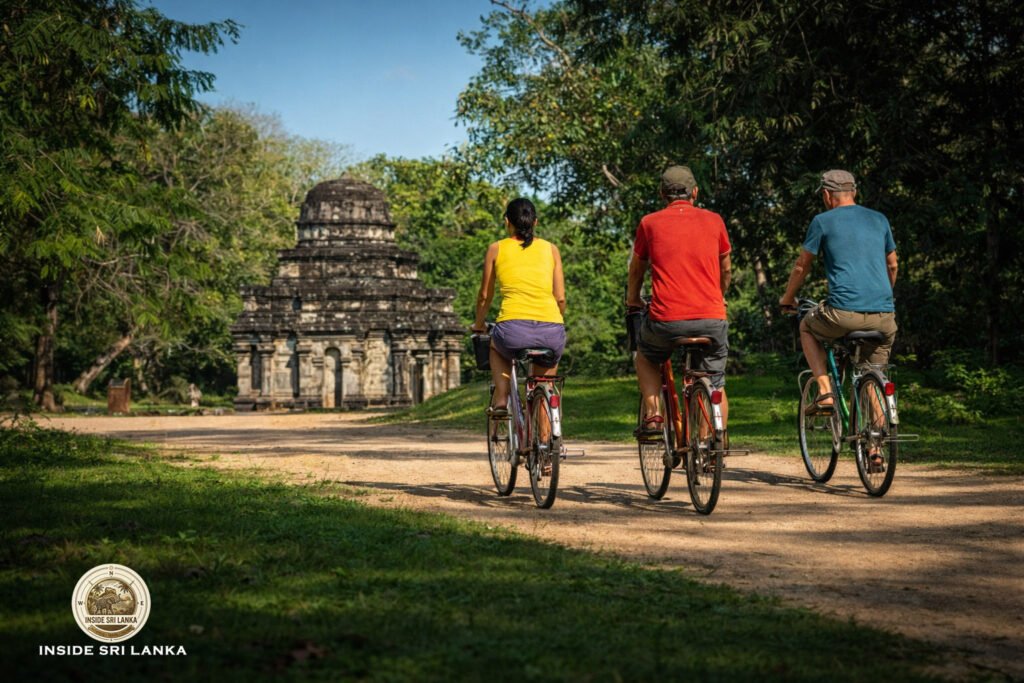
Polonnaruwa is best explored by bicycle. You can rent one at the entrance or from your guesthouse for around 500-1000 LKR. The ruins are spread out over several kilometers, and cycling under the giant tropical trees is much better than walking in the heat. Alternatively, you can hire a Tuk-Tuk for about $15-$20 for a full-day guided tour.
Entrance Fees & Tickets
The ticket for foreign tourists costs $30 USD. Important: You must buy your ticket at the Archaeological Museum before entering the ruins. The gates at the ruins do not sell tickets. The museum itself is excellent and worth visiting first to see the scale models of what the buildings once looked like.
What to Wear
Since you will be visiting religious sites:
- Cover your shoulders and knees (this applies to both men and women).
- You must remove your shoes and hat when stepping onto the temple platforms.
- Pro-Tip: The stone floors get extremely hot in the afternoon sun. Wear thick socks so you can walk on the hot stones without burning your feet!
Timing is Everything
The gates open at 7:30 AM. I highly recommend being there at the opening. Not only will you beat the heat, but the morning light is perfect for photography, and the site is much quieter.
The “Monkey Kingdom” Experience
You won’t be alone in Polonnaruwa. The ruins are home to hundreds of Toque Macaque monkeys. They were the stars of the Disney documentary Monkey Kingdom. They are fun to watch and photograph, but please do not feed them and keep a firm grip on your belongings!
Summary Table for Travelers
| Category | Information |
| UNESCO Site | Since 1982 |
| Time Needed | 4 – 6 Hours |
| Best Way to See it | Bicycle or Tuk-Tuk |
| Must-See Site | Gal Vihara & Vatadage |
| Location | North Central Province |
Conclusion: Why Polonnaruwa Stays in Your Heart
Polonnaruwa is more than just a graveyard of stones; it is a place where you feel the pulse of a civilization that lived in harmony with nature and art. Whether you are gazing at the giant statues of Gal Vihara or cycling alongside the breezy banks of the Parakrama Samudra, the city leaves you with a profound sense of awe.
If you are a traveler who values history, quiet exploration, and incredible craftsmanship, make sure Polonnaruwa is on your 2026 Sri Lanka itinerary.