
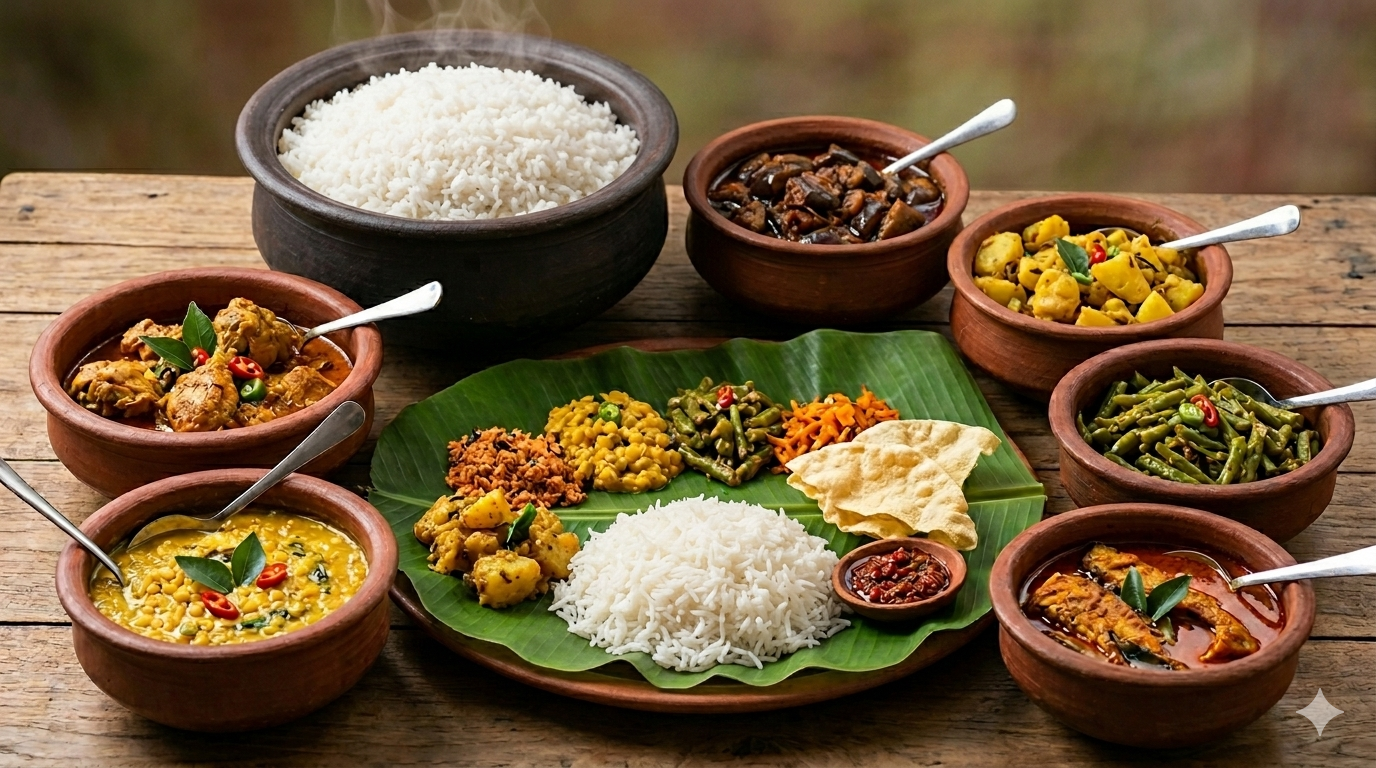
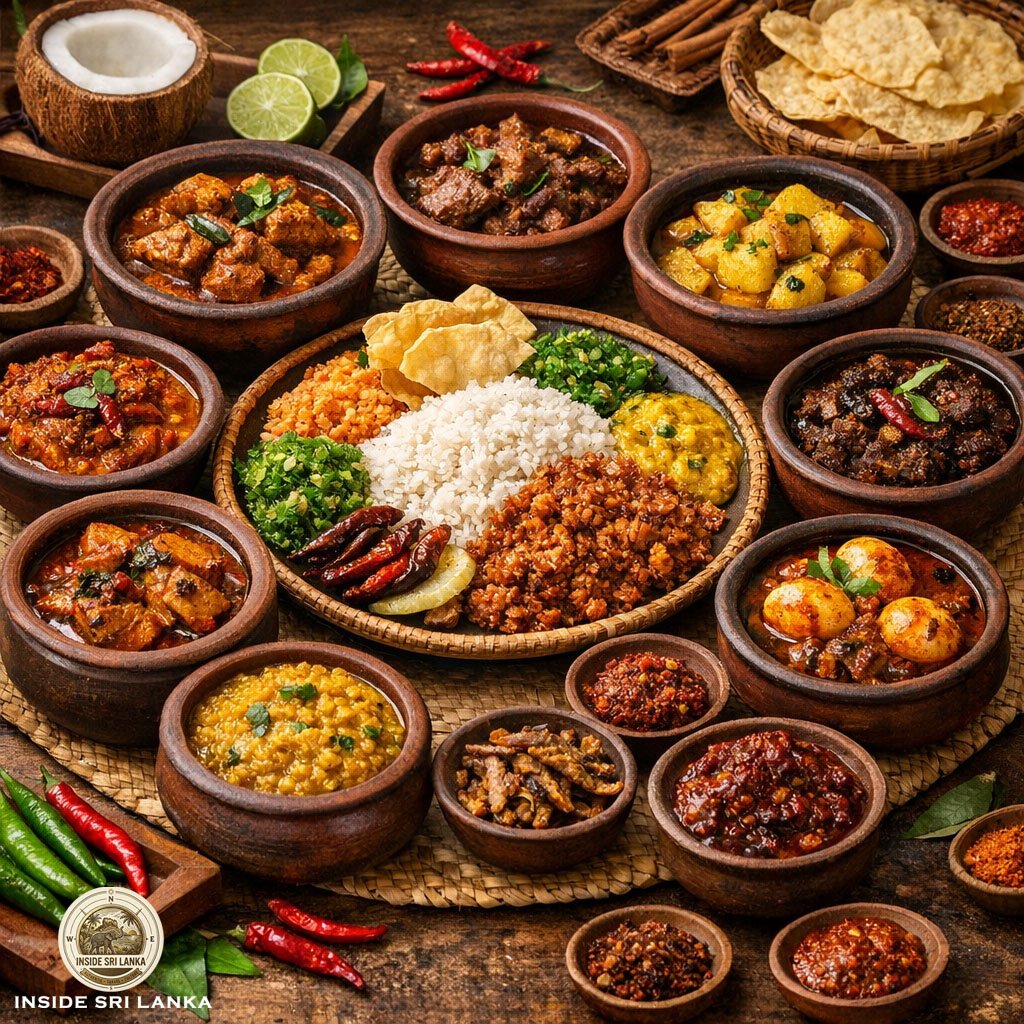
If you haven’t sat down for a traditional Rice and Curry meal in Sri Lanka, you haven’t truly experienced the island’s culture. To a local, it’s not just a meal; it’s a lifestyle, a daily ritual, and a colorful explosion of flavors, textures, and aromas. Sri Lankan Rice and Curry is a symphony where spices like cinnamon, cardamom, and roasted curry powder play the leading roles, creating a culinary experience that stays with you long after you’ve left the island.
In this ultimate guide, we’ll dive deep into what makes this dish so special, how it differs from Indian cuisine, and the “must-try” varieties for every traveler visiting Sri Lanka in 2026.
What is an Authentic Sri Lankan Rice and Curry?
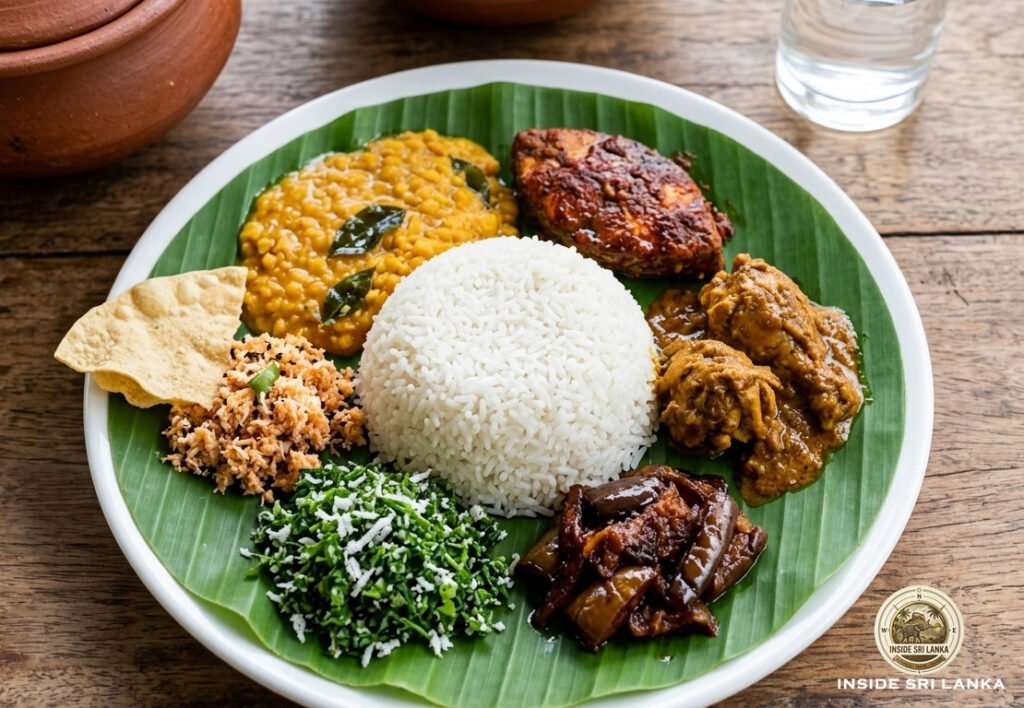
Unlike a western meal where you have one main dish and a side, a Sri Lankan spread is a feast. At the center of the table sits a large bowl of steaming rice—either the nutrient-rich red “Kekulu” rice or the fragrant white “Samba” rice. Surrounding this central mound are anywhere from five to ten different side dishes, each offering a distinct flavor profile: spicy, sour, sweet, and creamy.
The magic lies in the balance. A well-prepared meal will have something crunchy (like Papadam), something spicy (like a Meat or Fish curry), something creamy (like Dhal), and something refreshing (like a Green Mallum).
The Anatomy of the Plate: Essential Curries You Must Know
To navigate a Sri Lankan menu like a pro, you need to understand the components that make up the perfect plate:
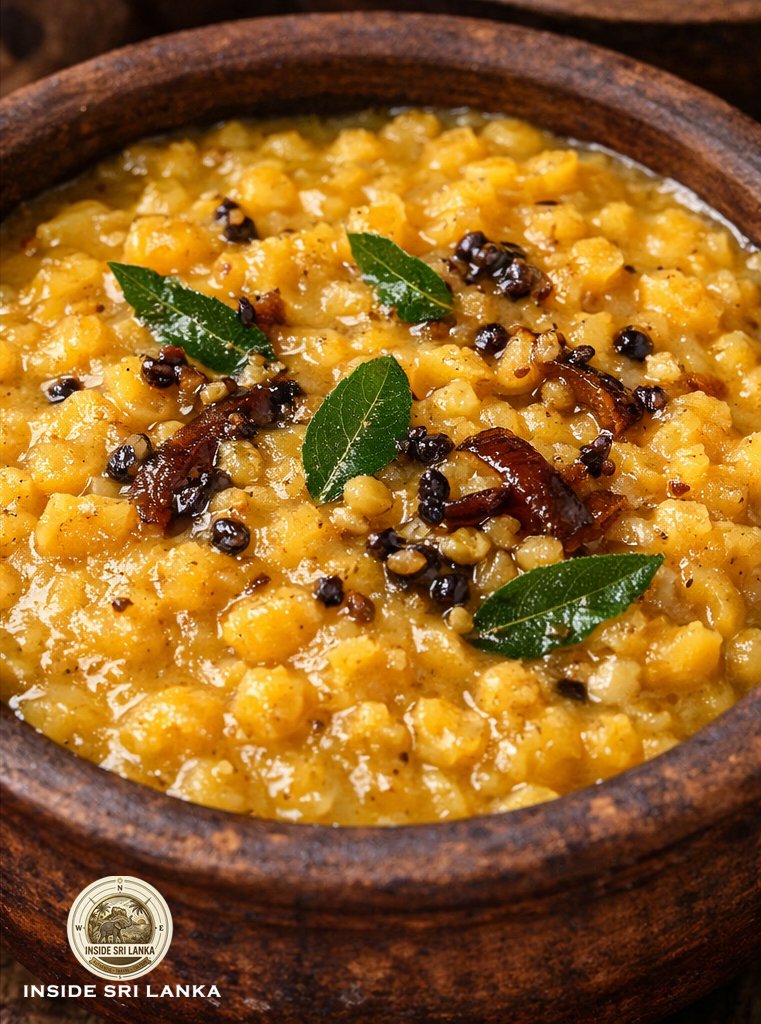
1. Parippu (The Iconic Red Lentil Dhal)
No Rice and Curry is complete without Parippu. These red lentils are cooked in coconut milk with turmeric, onions, and tempered with mustard seeds and curry leaves. It provides a creamy, mild base that balances the heat of the other curries.
2. The Protein: Fish, Chicken, or Beef Curry
Sri Lankans take their meat curries seriously. The Sri Lankan Chicken Curry is famous for its dark, roasted curry powder and thick gravy. If you are near the coast, the Ambul Thiyal (Sour Fish Curry) is a must-try. This unique dry curry uses “Goraka” (gamboge) to give the fish a tangy, sour flavor and a firm texture.
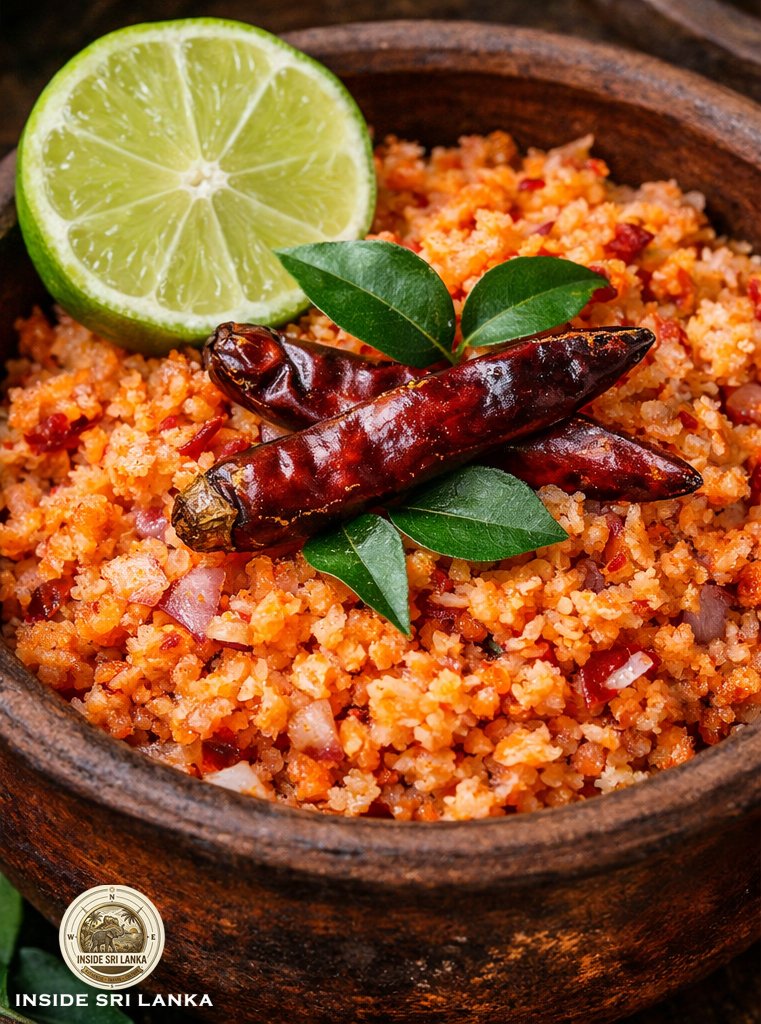
3. Pol Sambol (Coconut Relish)
This is the fiery soul of Sri Lankan food. It’s a fresh relish made from scraped coconut, red chili, red onions, lime juice, and a pinch of salt. It adds a spicy, zesty kick to every mouthful.
4. Wambatu Moju (Eggplant Pickle)
A fan favorite among travelers, this is a sweet, sour, and slightly spicy pickled eggplant dish. The eggplant is deep-fried and then caramelized with sugar, vinegar, and mustard seeds. It’s an absolute flavor bomb.
5. Gotu Kola Mallum (Green Leaf Salad)
To add freshness and health benefits, we include a “Mallum.” This consists of finely shredded green leaves (like Gotu Kola) mixed with grated coconut, lime, and green chilies. It’s the perfect palate cleanser.
How Sri Lankan Curry Differs from Indian Curry
Many travelers expect Sri Lankan food to be similar to Indian cuisine, but the differences are vast:
- The Spices: Sri Lankans use Roasted Curry Powder, which gives our curries a darker, deeper, and more intense flavor compared to the lighter masalas used in India.
- Coconut Milk: While North Indian cooking relies heavily on cream and butter, Sri Lankan cuisine is almost entirely powered by Coconut Milk, making it naturally dairy-free and incredibly creamy.
- The Heat: Generally, Sri Lankan food is considered one of the spiciest in the world. However, the use of coconut milk often helps to mellow the sting of the chilies.
Eating Like a Local: Tips for the Best Experience
If you want to truly enjoy your meal, follow these local etiquette tips:
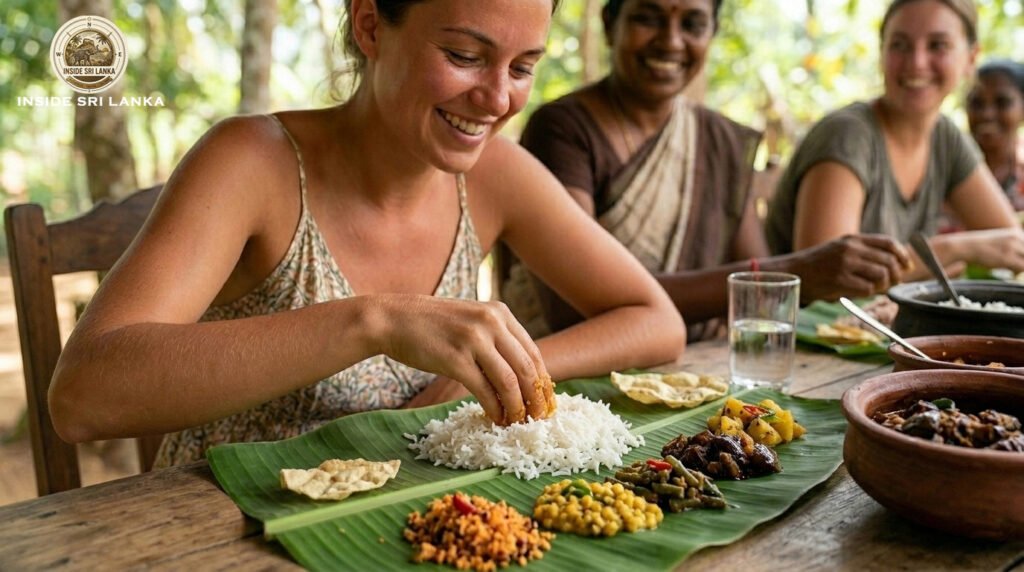
- Use Your Hands: Sri Lankans believe that food tastes better when eaten with your fingers. Mixing the rice and various curries together allows you to create the perfect blend of flavors in every bite. Use your right hand only!
- The “Rice to Curry” Ratio: Don’t just take a little bit of curry. The goal is to have enough gravy to soak into the rice.
- Manage the Heat: If the food is too spicy, don’t drink water immediately—it can actually spread the chili oil. Instead, take a big spoonful of plain rice or eat a piece of Papadam to neutralize the burn.
- Look for “Village” Restaurants: The best Rice and Curry isn’t found in 5-star hotels. Look for small, roadside eateries often labeled as “Hotels.” If you see a place serving food in Clay Pots (Hatti), you’ve found the jackpot.
Health Benefits of the Sri Lankan Diet
Beyond the taste, this meal is incredibly healthy. The turmeric is anti-inflammatory, the coconut oil provides healthy fats, and the variety of vegetables ensures a high intake of fiber and vitamins. Many dishes are naturally vegan and gluten-free, making it a paradise for health-conscious travelers.
Conclusion: A Journey for Your Taste Buds
Sri Lankan Rice and Curry is more than just food—it’s a warm welcome to the island. Each region has its own twist, from the seafood-heavy curries of Jaffna to the vegetable-rich spreads of the hill country. So, when you visit Sri Lanka in 2026, make sure you sit down, put your phone away, and lose yourself in the symphony of spices that define our beautiful home.
Summary Table for Foodies
| Dish Name | Primary Flavor | Main Ingredients |
| Parippu | Creamy & Mild | Red Lentils, Coconut Milk |
| Pol Sambol | Spicy & Zesty | Scraped Coconut, Chili, Lime |
| Wambatu Moju | Sweet & Sour | Fried Eggplant, Vinegar |
| Ambul Thiyal | Sour & Peppery | Tuna Fish, Goraka |
| Gotu Kola Mallum | Fresh & Herbal | Shredded Greens, Coconut |